
Winter Self Care Ideas for Adults Who Feel Drained
These winter self care ideas for adults help most when they focus on the basics that tend to matter most in darker months: light, movement, sleep, routine, warmth, skin care, and staying connected. If winter drains you every year, let go of the pressure to build a perfect cozy life and start with a few small actions that support your body and mood this week.
One quick note before the list: feeling a bit flat in winter is common, but if your mood drops sharply, you lose interest in daily life, or you’re sleeping much more, withdrawing, or struggling to function, it’s smart to speak with a qualified health professional. Seasonal affective disorder, or SAD, is a real form of depression and deserves proper care.
25 winter self care ideas for adults that actually help
You do not need to do all 25. Pick two or three that feel doable right now. Low effort still counts.
1. Get outside within an hour of waking
Morning light can help regulate your body clock and may support energy and mood. Even 10 to 20 minutes outdoors is a strong start. If it’s cloudy, it can still help to get daylight in your eyes without sunglasses for a little while, as long as that feels safe and comfortable.
2. Sit near a window for your first hot drink
If going outside feels like too much, take your tea, coffee, or breakfast to the brightest spot in your home. It’s not the same as outdoor light, but it beats starting the day tucked into a dim corner.
3. Consider a proper light box if winters hit you hard
Light therapy is a standard treatment for winter-pattern SAD. A Mayo Clinic guide to choosing a light box recommends one designed for SAD that gives 10,000 lux, filters out as much UV as possible, and is used in the morning, usually for about 20 to 30 minutes at roughly 16 to 24 inches away. It’s worth discussing this with a clinician, especially if you have eye conditions, bipolar disorder, or other health concerns.
4. Make your mornings easier, not more ambitious
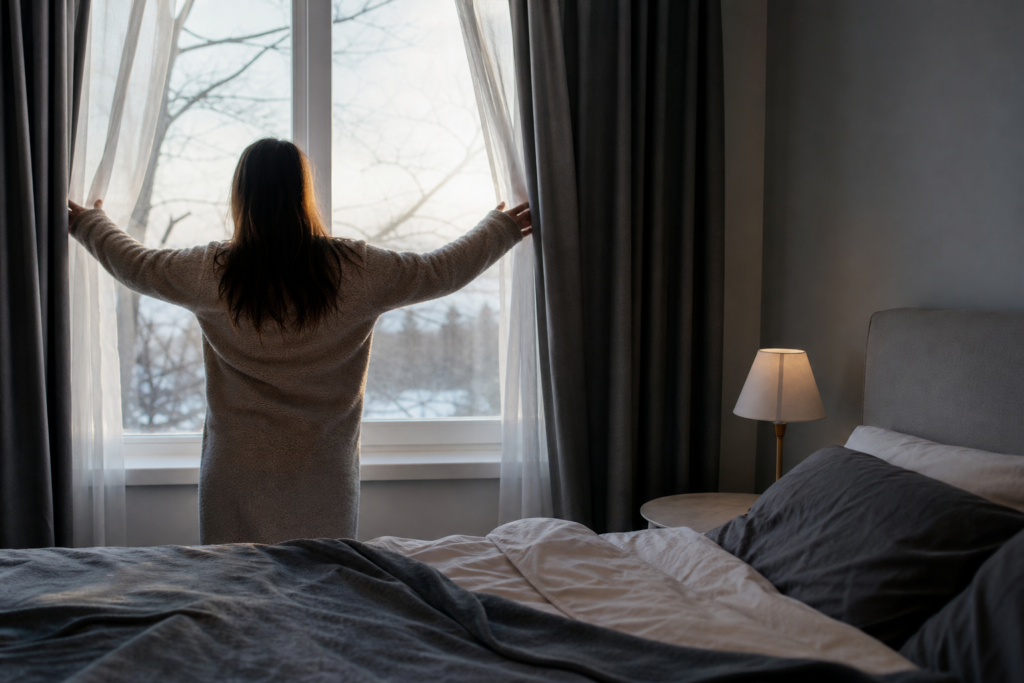
Winter is usually the wrong season for a complicated 12-step routine. Try a short anchor instead: open the curtains, drink water, wash your face, get dressed, and step outside for five minutes. If you want help building something gentler, this guide on how to build a morning routine for anxiety fits well here too.
5. Keep one tiny daily movement promise
Not a big fitness plan. Just one promise you can realistically keep. A 10-minute walk after lunch. Two songs of stretching. Five trips up the stairs. Federal activity guidance for adults aims higher over a full week, but if you feel inactive and drained, starting small is the right move.
6. Walk when daylight is available
If your schedule allows, move your walk from evening to lunch break or mid-morning. You get movement and natural light in the same habit, which is useful when your energy is low.
7. Add a little strength work twice a week
You don’t need a gym. Try bodyweight squats to a chair, wall push-ups, or carefully carrying grocery bags. Two short sessions a week is a practical target. It can support energy, mood, and physical resilience during a season when many people feel sluggish.
8. Aim for a steadier sleep schedule
Adults generally need seven or more hours of sleep. In winter, it’s easy to slide into irregular nights, long lie-ins, and afternoon naps that make nighttime sleep worse. Pick a realistic wake time and protect it most days, even if your bedtime still needs work.
9. Create a darker evening and a brighter morning
This contrast matters. Dim the lamps in the evening, cut back on bright screens close to bed, then get light exposure soon after waking. Your body responds well to clear cues.
10. Eat regular meals, especially if low mood kills your appetite
Skipping meals can make low energy feel even worse. Winter self-care can be as basic as soup, toast with eggs, yogurt with fruit, or oatmeal with peanut butter. Warm, simple food is still real care.
11. Keep easy comfort meals on standby
When you’re drained, fewer decisions help. Make a short list of winter defaults, such as lentil soup, rotisserie chicken with microwave rice, pasta with frozen veg, or chili from the freezer. You can also browse the site’s breakfast ideas or simple meals in the entree category when you want low-fuss options.
12. Don’t treat sugar, alcohol, or endless caffeine as emotional rescue
A hot chocolate or coffee can be lovely. The problem is expecting it to carry your mood. If you’ve been relying on quick hits to get through every afternoon, try pairing them with something more supportive like food, daylight, or a short walk.
13. Moisturize right after washing
Winter air can be hard on your skin. A simple lotion or cream applied right after washing your hands or showering helps lock in moisture. It’s one of those unglamorous habits that can make you noticeably more comfortable within days.
14. Turn hot showers down to warm
Very hot water can make winter dryness worse. Warm showers are kinder to skin, and if your home is dry, a cool-mist humidifier may help too. The American Academy of Dermatology winter skin guide also recommends SPF 30+ on exposed skin year-round.
15. Do a five-minute home reset before dark
Clutter often feels heavier in winter when you’re spending more time indoors. Set a timer for five minutes and reset the space you use most: clear the coffee table, wash a few dishes, fold the blanket pile, throw away the junk mail. That small bit of visual calm can shift the tone of your whole evening.
16. Make one corner of your home easier to be in
Not prettier for social media. Easier. Put a lamp by the chair you actually sit in. Keep lip balm and hand cream there. Add a blanket. Charge your phone nearby. Self-care is much easier when your environment supports it.
If your space has been adding to your stress, you might like how to stop feeling overwhelmed at home.
17. Use the “minimum day” version of your habits
On rough days, lower the bar without quitting entirely. Minimum day examples: brush your teeth, take your meds, step outside for three minutes, eat one decent meal, text one person, shower or change clothes. That still counts as caring for yourself.
18. Plan one thing each week that gets you out of the house
Winter can make life feel very small. Work, home, repeat. Put one outside-the-house plan on the calendar each week, even if it’s simple: the library, a café, grocery shopping at a different store, a walk with a friend, a faith service, or a class at the community center.
19. Schedule connection like it matters, because it does
Social connection supports health. If you tend to isolate when you feel low, build in daily or near-daily contact on purpose. A voice note, short call, lunch-break text, or asking a neighbor how they’re doing is enough to keep the thread alive.
20. Tell one person that winter is hard for you
You don’t need a dramatic speech. Try: “I get pretty flat this time of year. Want to do a weekly check-in?” Clear, simple, honest. People often respond better when they know what would actually help.

21. Give yourself emotional rest, not just physical rest
Sometimes you’re not lazy or weak. You’re emotionally overloaded. Reduce one draining input this week: doomscrolling, background news all evening, a group chat that spikes your stress, or a commitment you can reasonably pause. If that sounds familiar, read these signs you need emotional rest.
22. Keep a short “winter helps” list on your phone
When your mood drops, it’s hard to remember what works. Make a simple note called Winter Helps. Include things like “walk at lunch,” “soup for dinner,” “call Sam,” “fresh sheets,” “light box,” “early bedtime,” or “no scrolling before bed.” Use your own evidence.
23. Watch for signs this is more than the winter blues
Ordinary winter blah can feel different from SAD. If symptoms return each year and include persistent low mood, loss of interest, oversleeping, overeating or strong carb cravings, weight changes, and social withdrawal, it may be more than a seasonal slump. The National Institute of Mental Health overview of SAD explains the symptoms and treatment options clearly.
24. Consider therapy support if winter shifts your thinking
Winter can bring repetitive thoughts like “everything is harder,” “I’m failing,” or “I’ll feel like this forever.” Cognitive behavioral therapy adapted for SAD is one option that has been studied. You do not need to wait until things feel unbearable to ask for help.
25. Do a gentle reset instead of waiting for spring
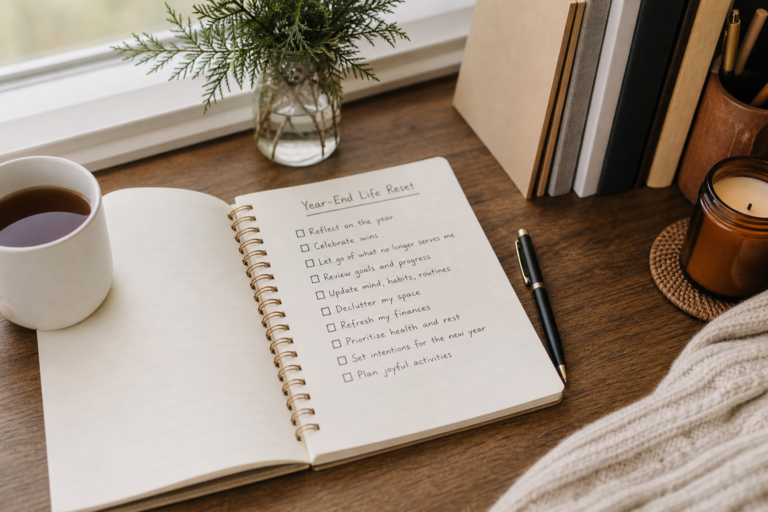
If the season has knocked you off track, a small reset can help. Review your sleep, meals, movement, home stress, and what your week actually looks like right now. These two reads can help you do that without turning it into a full life overhaul: End of Year Life Reset Checklist That Actually Helps and tiny habits for better mental health when tired.
What helps most when you have very low energy?
If you’re not sure where to start, focus on the highest-impact basics first. They’re usually more useful than piling on lots of cozy extras.
| If you feel… | Try this first | Why it helps |
|---|---|---|
| Groggy all morning | Daylight within an hour of waking | Supports your body clock and alertness |
| Flat and restless | 10-minute walk in daylight | Combines movement, light, and a change of scene |
| Overwhelmed at home | 5-minute reset before dark | Reduces visual stress and decision fatigue |
| Lonely or withdrawn | One planned check-in each day | Keeps connection going without much effort |
| Dry, itchy, uncomfortable | Warm showers and moisturizer after washing | Supports the skin barrier in winter air |
| Completely off track | Use a minimum-day checklist | Makes self-care possible on low-capacity days |
A few winter self-care myths worth dropping
- Myth: Self-care has to be indulgent to count. Better idea: Basics like sleep, meals, light, and a walk often help more.
- Myth: Any bright lamp will do. Better idea: If you’re using light therapy, use a device made for SAD and follow proper guidance.
- Myth: Isolation is healing. Better idea: Rest matters, but so does staying connected.
- Myth: You need motivation first. Better idea: Tiny actions often come before better feelings, not after.
Start here if winter always knocks you sideways
Pick one habit for mornings, one for your body, and one for connection. For example: open the curtains and step outside for five minutes, walk at lunch twice this week, and text one friend every evening. That’s enough for now.
If you’ve been feeling persistently low, losing interest in life, or struggling to function, please speak with a doctor or mental health professional. You do not have to tough this season out alone.
Frequently Asked Questions
What are the best winter self care ideas for adults with low energy?
The most useful ideas are usually simple: get daylight soon after waking, keep a steady wake time, eat regular meals, take short walks, moisturize dry skin, and stay in touch with people. If your energy is very low, use tiny versions of habits rather than waiting until you feel motivated.
How do I know if it’s winter blues or seasonal affective disorder?
Winter blues usually feel mild and manageable. SAD is a form of depression with a seasonal pattern and can affect daily functioning. Warning signs can include persistent low mood, loss of interest, oversleeping, overeating or carb cravings, weight gain, and social withdrawal. A qualified health professional can help you sort that out.
Does light therapy really help in winter?
It can help some people, especially with winter-pattern SAD. Guidance commonly recommends a light box made for SAD that provides 10,000 lux, filters out UV, and is used in the morning for about 20 to 30 minutes. It’s smart to check with a clinician first if you have relevant medical or mental health concerns.
What if I don’t feel like exercising in winter?
Start much smaller than you think you should. A 5 to 10 minute walk, a few stairs, or two songs of stretching still count. When energy is low, the goal is consistency, not intensity. Daylight walks are especially useful because they pair movement with light exposure.
Can winter self-care be enough if I feel really down?
Sometimes small habits help a lot, especially with a mild seasonal slump. But if you feel persistently depressed, are struggling to function, or your symptoms come back every winter, self-care may not be enough on its own. A doctor or mental health professional can help you look at treatment options and support.