How to Cope With Seasonal Depression Naturally
If you’re searching for how to cope with seasonal depression naturally, start with a few repeatable habits: get bright light early in the day, go outside daily, move your body, keep sleep and wake times steady, and stay in contact with people you trust. These steps can support your mood and energy, but they’re support, not a guaranteed cure.
Seasonal depression, often called seasonal affective disorder or SAD, is a real form of depression with a seasonal pattern. That matters because while gentle self-help can help, some people also need professional care, especially if symptoms are intense, come back every year, or make daily life hard.
First, know the difference between winter blues and seasonal depression
A lot of people feel slower, sleepier, or less motivated in darker months. That alone doesn’t mean SAD.
Seasonal affective disorder is a form of depression that tends to return during the same season each year, usually fall and winter. According to the National Institute of Mental Health’s guide to seasonal affective disorder, symptoms often last about 4 to 5 months of the year.
Common signs can include:
- low mood most of the day
- loss of interest in things you usually enjoy
- low energy
- sleeping more than usual
- changes in appetite, often craving carbohydrates
- weight gain
- difficulty concentrating
- feeling hopeless, worthless, or unusually irritable
Winter blues are usually milder. You may feel less motivated or more tired, but still function fairly normally. SAD is more likely to interfere with work, relationships, daily tasks, and your ability to enjoy life.
If you notice this pattern showing up at the same time every year, take it seriously. Self-diagnosing can miss other causes, including other forms of depression, bipolar disorder, thyroid problems, or medication issues.
Natural ways to support your mood during seasonal depression
You do not need a perfect routine. You need a few basics, done consistently enough to give your body and brain better signals.
1. Get outdoor light early, even when it’s cloudy
Morning light matters because it helps regulate your internal body clock. That affects sleep, alertness, and mood.
Try this for one week:
- Go outside within an hour of waking
- Stay out for 10 to 30 minutes if you can
- Walk, stand on the porch, or sit near a bright outdoor area
- Keep doing it even on grey days
Cloudy daylight is still much brighter than most indoor rooms. If mornings are rough, pair it with something simple: a hot drink, a short walk around the block, or taking out the bins before coming back in.
If dark mornings are especially hard for you, these healthy routines for dark mornings can make getting started feel less heavy.
2. Use a light box carefully if a clinician says it’s appropriate
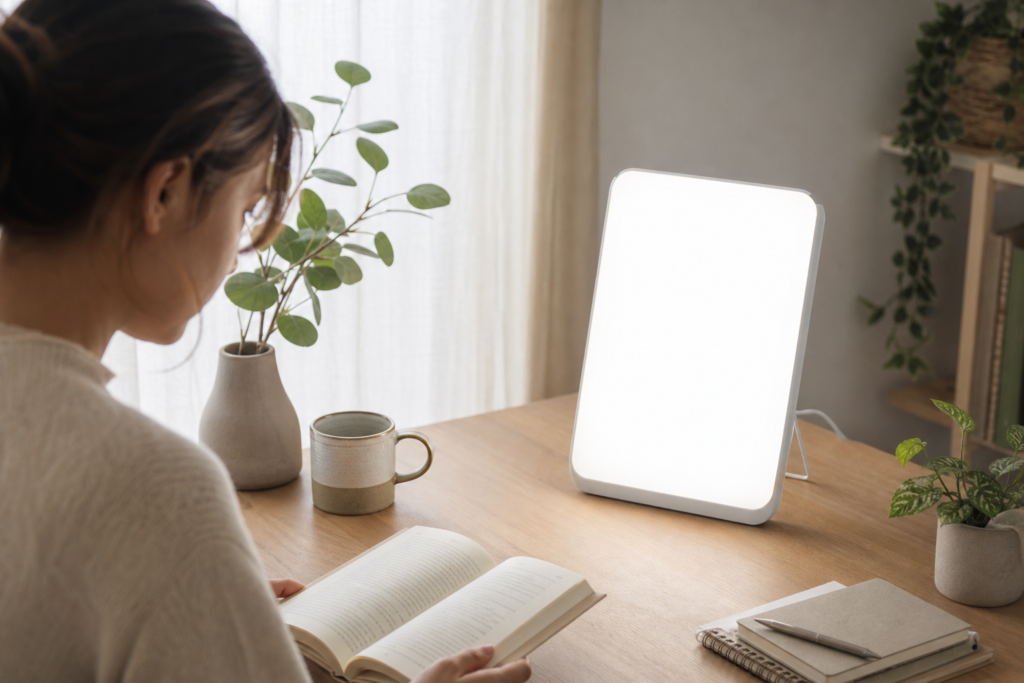
Light therapy comes up often because it can help some people with winter-pattern SAD. A commonly used setup is a 10,000-lux light box for about 30 to 45 minutes, usually first thing in the morning, often from fall through spring.
That said, light therapy is not for everyone. It needs extra caution if you have certain eye conditions, take medicines that increase light sensitivity, or have bipolar disorder, because bright-light treatment may trigger mania in some people.
So yes, it can be useful. No, it isn’t something to treat casually. The Mayo Clinic’s SAD treatment page explains when light therapy is commonly used and why a professional opinion matters first.
3. Move your body most days, even in short bursts
Exercise doesn’t have to be intense to help. A brisk 10-minute walk at lunch, stretching while dinner cooks, or a 20-minute beginner workout at home all count.
The main goal is regularity.
Movement helps because it gets you out of passivity, improves sleep pressure later in the day, and gives your day some shape. In winter, combining movement with daylight is even better. A short walk outdoors beats waiting for the perfect workout.
If your energy is very low, lower the bar:
- walk for 5 minutes after breakfast
- do 10 bodyweight squats while the kettle boils
- put on one song and tidy or stretch until it ends
- pace during a phone call
Small efforts still matter. If you need gentle ideas, these tiny habits for better mental health when tired are a good place to start.
4. Keep your sleep and wake times boringly consistent
Seasonal depression often pulls people toward oversleeping, irregular bedtimes, or staying up late because evenings feel flat and unstructured. That makes mornings harder, which can mean less daylight and a worse cycle.
Try to keep your wake time within the same 30 to 60 minutes every day, including weekends if possible. Focus on wake time first. Bedtime usually gets easier when mornings are steadier.
A simple evening plan helps too:
- dim lights an hour before bed
- put your phone across the room or on a charger outside the bedroom
- avoid long naps late in the day
- do the same 2 or 3 wind-down steps each night
If anxiety and low mood mix together for you, this guide on building a morning routine for anxiety may help you create a gentler start.
5. Eat regularly, not perfectly
When mood drops, eating can swing in either direction. Some people lose interest in food. Others crave sugary or starchy foods all day. The aim isn’t to eat flawlessly. It’s to avoid making low energy worse by under-eating, skipping meals, or relying only on quick comfort foods.
A steady pattern helps:
- eat breakfast within a couple of hours of waking
- include protein in meals when you can, such as eggs, yogurt, beans, tofu, fish, or chicken
- keep easy options around for low-energy days
- pair carbs with protein or fat for steadier energy
Think simple meals, not aspirational ones. Toast and eggs. Soup and bread. Oats with peanut butter. Pasta with beans and olive oil. Good enough is useful.
6. Stay connected before you feel like isolating
Seasonal depression often makes people withdraw. You cancel plans, ignore messages, and tell yourself you’ll reconnect when you feel better. The problem is that isolation usually deepens the slump.
Make social contact smaller and easier:
- text one friend instead of messaging five people
- invite someone for a short walk rather than a full evening out
- sit in a cafe or library if being home all day feels heavy
- join one regular thing, like a weekly class or volunteer shift
You don’t need to become highly social. You just need enough human contact to interrupt the closed loop of being alone with low thoughts.
7. Keep one or two enjoyable activities on purpose
When you’re low, waiting to feel motivated usually doesn’t work. It helps more to schedule small activities that give you either pleasure, structure, or a sense of accomplishment.
That might mean:
- reading 10 pages before bed
- baking on Sunday afternoon
- watching a comforting show after your walk
- working on a puzzle
- going to the market every Saturday morning
This idea is also part of CBT for SAD, which focuses in part on challenging unhelpful seasonal thoughts and increasing engaging activities. You don’t have to force joy. Just give your week something besides endurance.

A simple daily plan if you feel overwhelmed
When your mood is low, long advice lists can turn into one more thing to fail at. So here’s a stripped-down version.
| Time of day | Helpful action | Low-effort version |
|---|---|---|
| Morning | Get bright light soon after waking | Stand outside for 5 to 10 minutes with a hot drink |
| Late morning | Eat something with protein | Yogurt, eggs, milk, nuts, or peanut butter on toast |
| Afternoon | Move your body | 10-minute walk or stretch break |
| Evening | Text or talk to one person | Send a simple check-in message |
| Night | Keep a steady wind-down routine | Dim lights and go to bed at roughly the same time |
If life feels too chaotic for even that, start with only two anchors: morning light and a consistent wake time. Those two habits often make other habits easier to add.
You may also find these winter self-care ideas for adults who feel drained useful, especially if you’re craving support that feels gentle rather than intense.
What about vitamin D and other natural supplements?
This is where a lot of online advice gets too confident.
Vitamin D gets mentioned often because low vitamin D levels are found in some people with SAD. But that does not mean vitamin D is a proven fix for seasonal depression. Authoritative sources describe the evidence as mixed or unclear.
The same caution applies to many other supplements marketed as mood support. Natural does not automatically mean effective or safe.
If you suspect a deficiency or want to try a supplement, talk with a qualified clinician or pharmacist first, especially if you take other medications or have a health condition. That’s the safest path.
When self-help may not be enough
Please don’t try to white-knuckle your way through severe symptoms.
It may be time to seek professional help if:
- your symptoms return every year
- you feel low most days for weeks at a time
- you struggle to work, study, parent, or manage daily tasks
- you feel hopeless or numb
- you lose interest in nearly everything
- your sleep or appetite changes a lot
- you have any thoughts of self-harm or suicide
Seasonal depression is still depression. A doctor or mental health professional can help rule out other causes and talk through treatments such as therapy, light therapy, or medication where appropriate.
The NHS overview of seasonal affective disorder is a clear place to read more about symptoms and when to get help.
If you have a history of bipolar disorder, or think you may have experienced mania or hypomania, get professional guidance before trying light therapy on your own.
If this season is hard, make your plan smaller
A lot of suffering comes from expecting yourself to function exactly as you do in brighter months. Sometimes the wiser move is to scale down and protect the basics.
Ask yourself:
- What helps my mornings go a little better?
- What habits make my mood worse every single time?
- Which two supports can I repeat this week?
You don’t need a complete personal reinvention by Monday. You need a few reliable supports you can keep doing when motivation is low.
If your whole life feels heavy, not just your mood, these guides on how to stop feeling overwhelmed with life and signs you need emotional rest may help you sort out what needs attention first.
Start with tomorrow morning. Open the curtains. Step outside. Let the plan be simple enough that you can actually do it.
Frequently Asked Questions
Can seasonal depression go away naturally?
Sometimes mild seasonal low mood improves with habits like daily daylight, regular sleep, exercise, and social contact. But seasonal affective disorder is a form of depression, so natural strategies may not be enough for everyone. If symptoms are strong, return each year, or affect daily life, it’s wise to speak with a qualified professional.
What is the best natural remedy for seasonal depression?
There usually isn’t one single best remedy. The most useful natural supports are often morning daylight, outdoor time, regular movement, consistent sleep, and staying connected to other people. For some people, clinician-guided light therapy also helps, but it should be used carefully because it isn’t suitable for everyone.
How do I know if it’s winter blues or SAD?
Winter blues tend to be milder and more manageable. SAD is more disruptive. You may feel persistently low, lose interest in normal activities, sleep more, crave carbohydrates, struggle to concentrate, and find work or daily tasks much harder. If it happens around the same season each year, get assessed rather than guessing.
Does vitamin D help seasonal depression?
Maybe, but the evidence is mixed. Low vitamin D levels are seen in some people with seasonal depression, but that does not prove supplementation will relieve symptoms. If you think you may be deficient or want to try vitamin D, ask a doctor or pharmacist what makes sense for your situation.
When should I get help for seasonal depression?
Reach out for help if your symptoms last for weeks, come back every year, interfere with work or relationships, or leave you feeling hopeless. Get urgent support right away if you have thoughts of self-harm or suicide. A professional can rule out other causes and help you choose safe treatment options.