
Healthy Routines for Dark Mornings That Help
Healthy routines for dark mornings work best when they focus on four basics: a steady wake time, bright light early in the day, a little movement, and a simpler first hour. You do not need a heroic winter morning. You need one that helps your body clock switch on, supports your mood, and makes bedtime easier later.
If you feel groggy, flat, or oddly fragile when mornings stay dark, that does not mean you are lazy. Less daylight can affect sleep timing, alertness, and mood. The good news is that a few small changes often do more than an elaborate routine ever will.
Why dark mornings feel so hard in the first place
Winter tiredness is not just “in your head.” Light is one of the strongest signals for your circadian rhythm, the internal clock that helps control sleep and alertness. When mornings are dim and days are short, your body gets a weaker signal that it is time to wake up.
That is why many people feel slow to wake, less motivated to move, and more tempted to stay under the duvet. If you also go to bed later, sleep in on weekends, or spend the first hours of the day under low indoor light, the problem can linger.
According to the CDC, most adults need 7 or more hours of sleep. Just as important, sleep and wake times work better when they stay fairly consistent, even on weekends.
Healthy routines for dark mornings start the night before
If winter mornings feel brutal, it is tempting to focus only on alarms, coffee, or sheer willpower. A better question is: what will make waking easier tomorrow?
- Keep a regular wake time. This matters more than building a perfect ritual. Try to keep your wake time within about 30 to 60 minutes, even on days off.
- Aim for enough sleep. If you need to wake at 6:30, a midnight bedtime is probably making things harder.
- Dim things down in the evening. Brighter light earlier in the day and lower light later on support a healthier rhythm.
- Set out one helpful thing. Walking clothes, a mug by the kettle, or breakfast ingredients can take some of the friction out of the morning.
If your days already feel overloaded, keep the prep tiny. A routine should lower resistance, not hand you one more task. If that sounds familiar, you might also like tiny habits for better mental health when tired.
Your first 60 minutes: a simple winter routine that actually works
You do not need to do all of this every day. Pick two or three steps and repeat them until they feel ordinary.
1. Wake up at roughly the same time
Consistency beats intensity here. Sleeping much later on weekends can throw off your sleep-wake rhythm, which often makes Monday mornings worse. If you want extra rest, an earlier bedtime usually helps more than a dramatic lie-in.
2. Get bright light as early as you can
This is the most useful habit for many people. Open the curtains right away. Turn on bright lights in the room where you get ready. Then try to get outside, even if the sky is grey.
Cloudy daylight is still far brighter than typical indoor lighting, and morning light helps set the body clock. A 10-minute walk, standing on the step with a hot drink, or walking part of your commute can be enough to get started.
If mornings are impossible, aim for light earlier in the day rather than skipping it altogether. A lunchtime walk still helps.
3. Move a little before you expect yourself to think clearly
You do not need a full workout at dawn. A few minutes of movement can lift alertness and make the morning feel less heavy.
- 5 minutes of brisk walking
- 10 bodyweight squats and wall push-ups
- Gentle mobility in the kitchen while water boils
- One song of stretching
The bigger picture matters more than exercising at sunrise. Adults should get at least 150 minutes of moderate activity a week, plus two days of muscle-strengthening work. If you prefer to move later in the day, that still counts.
4. Eat something steady if your body wants it
Some people feel better with breakfast. Others need a little time first. Either is fine. The goal is not a perfect breakfast aesthetic. It is having an option that does not leave you crashing at 10 a.m.
Easy examples:
- Greek yogurt with berries and oats
- Toast with eggs or peanut butter
- Porridge with nuts and fruit
- A banana plus a handful of nuts if you are not very hungry
If breakfast is where mornings tend to unravel, browsing the site’s easy breakfast ideas can help you build a short winter list.
5. Delay doomscrolling for 15 minutes
Dark mornings can already leave you feeling flat and underpowered. Starting the day with upsetting headlines, work messages, or social comparison rarely helps. Give your brain a softer landing if you can.
You could check the weather, your calendar, and one message thread, then stop. Or keep your phone out of reach until you have had light, water, and a few breaths. If anxiety tends to hit first thing, this guide to a morning routine for anxiety may help you shape a calmer start.
What to do if natural light is not enough
For some people, especially in very dark winters, natural light is hard to get at the right time. That is where two tools often come up: sunrise alarm clocks and light therapy boxes.
Sunrise alarms
A sunrise alarm gradually brightens your room before your wake time. Many people find this gentler than waking up suddenly in darkness. It can make getting out of bed feel less jarring.
Still, it is best thought of as a comfort and consistency tool, not the same thing as clinical light therapy.
Light therapy boxes
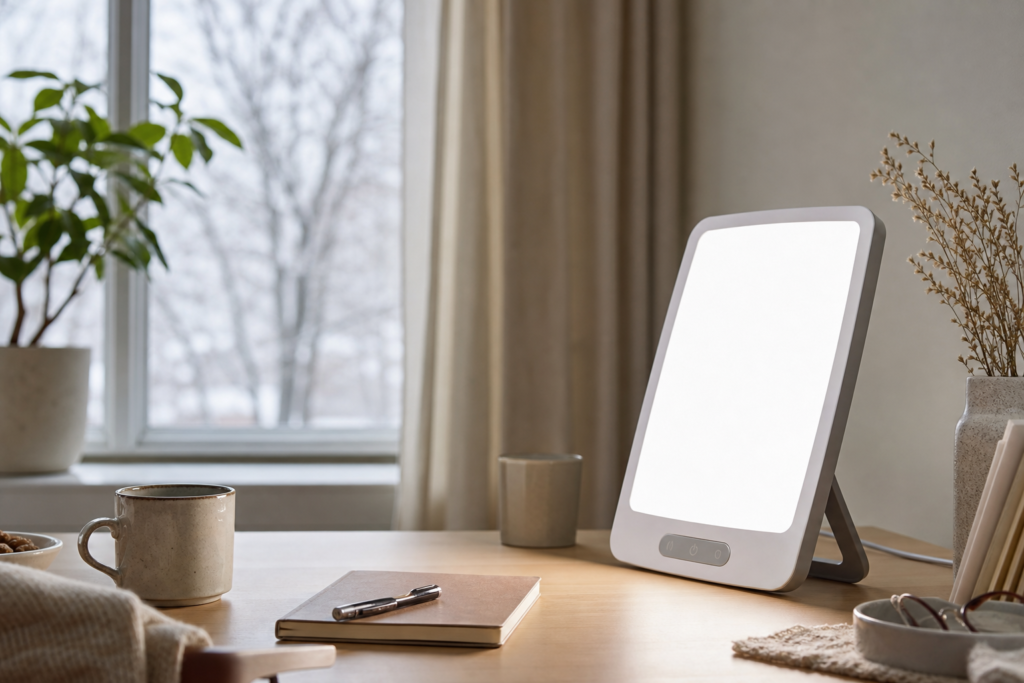
Evidence-based light therapy is more specific than using a bright lamp in the corner of your room. The National Institute of Mental Health describes a common approach for winter-pattern SAD as a 10,000-lux light box used for about 30 to 45 minutes, usually first thing in the morning.
That does not mean everyone should rush out and buy one. The NCCIH notes that light therapy may not be suitable for everyone, including some people with retinal disease, recent eye surgery, bipolar disorder, or those taking medicines that increase light sensitivity.
If you are considering light therapy, especially because your winter symptoms are strong or come back every year, it is sensible to speak with a qualified clinician first.
The winter morning mistakes that keep people stuck
A few common habits can quietly make dark mornings harder.
| Habit | Why it backfires | Better swap |
|---|---|---|
| Sleeping much later on weekends | Can disrupt your body clock and make weekday mornings rougher | Keep wake time fairly close, then rest earlier at night |
| Staying indoors all morning | Misses a strong daytime light cue | Step outside for 5 to 15 minutes |
| Expecting a full workout before work | Creates too much friction and gets skipped | Start with 5 minutes of movement |
| Using any bright lamp as “light therapy” | Ordinary lamps are not the same as a clinical light box | Use natural morning light or learn proper light therapy guidance |
| Doing nothing because the routine is not perfect | All-or-nothing thinking kills consistency | Pick the smallest useful version and repeat it |
A low-effort dark morning routine for hard days
Some mornings are not for self-improvement. They are for getting through with a bit more steadiness. On those days, use a minimum version.
- Open the curtains or turn on bright lights.
- Drink water.
- Stand outside or by a window for 5 minutes.
- Do 10 slow stretches or walk to the end of the street and back.
- Eat or pack one simple breakfast.
That is enough. Really.
If this season is draining you more broadly, you may also find support in winter self care ideas for adults who feel drained and signs you need emotional rest.
When dark mornings may be more than a routine problem
Sometimes the issue is not just sluggishness. Winter-pattern seasonal affective disorder, or SAD, is a real form of depression linked to seasonal change. Symptoms can include low mood, oversleeping, carbohydrate cravings, weight gain, and pulling away from other people.
If your symptoms come back each winter, last for weeks, or affect work, relationships, or daily functioning, it is worth getting proper support. Self-help routines can still help, but they may not be enough on their own.
A good next step is reading the NIMH guide to seasonal affective disorder and talking with your GP, therapist, or another qualified health professional. If you have bipolar disorder, eye conditions, recent eye surgery, or take medicines that increase light sensitivity, ask a clinician before trying light therapy.
How to make your routine stick past one motivated Monday
The best winter routine is the one you can repeat when you are tired. That usually means less ambition, more cues, and fewer decisions.
- Attach habits together. Curtains open, kettle on, shoes on.
- Make the first step visible. Put socks, coat, or mug where you cannot miss them.
- Track one thing. For example: “Got outside before noon, yes or no?”
- Use a two-tier plan. Have a full version and a bare-minimum version.
- Review after one week. Keep what helped. Drop what felt performative.
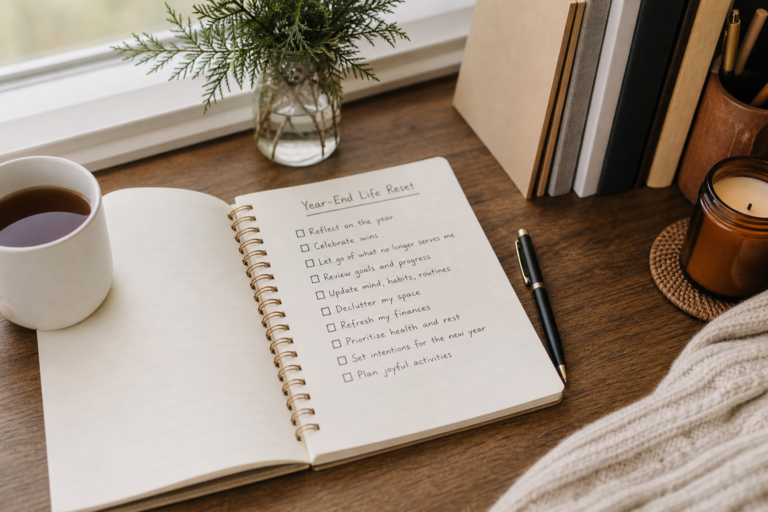
If life feels messy well beyond your mornings, you might want to pair this routine with an end of year life reset checklist or gentle steps for getting your life together after a hard year.
A realistic 20-minute winter morning template
Here is one simple example. Adjust the times and order to fit your real life.
| Minute | What to do |
|---|---|
| 0-2 | Get up, open curtains, switch on bright lights |
| 2-5 | Drink water, wash face, avoid social media |
| 5-10 | Step outside or walk around the block |
| 10-15 | Stretch, do a few squats, or tidy the kitchen while moving |
| 15-20 | Eat a simple breakfast or pack one for later |
You can make this even smaller. The point is to help your body recognise: it is daytime now, we are awake, and the day has started.
Tomorrow morning, try just this: wake at your usual time, get light in your eyes early, and step outside for five minutes. Small winter habits matter more than dramatic plans.
Frequently Asked Questions
How can I wake up easier when it’s dark outside?
Keep your wake time consistent, get bright light as soon as possible, and move a little in the first hour. Open curtains right away, turn on bright indoor lights, and step outside for 5 to 15 minutes if you can. Those cues help your body clock wake up more reliably.
Does morning light really help winter mood and sleep?
Yes, for many people it can help both. Morning and daytime light support your circadian rhythm, which affects alertness, mood, and when you feel sleepy at night. Even cloudy outdoor light is usually much brighter than indoor light, so a short walk or time outside can still be useful.
Are sunrise alarms the same as light therapy boxes?
No. Sunrise alarms can make waking feel gentler by brightening the room before your alarm goes off, but they are not the same as clinical light therapy. Light therapy for winter-pattern SAD uses a specific type of light box, usually 10,000 lux for about 30 to 45 minutes in the morning.
When should I worry that dark mornings are more than normal winter tiredness?
If your low mood, oversleeping, cravings, or lack of motivation return every winter, last for weeks, or interfere with work and daily life, it may be more than routine sluggishness. In that case, speak with a GP or mental health professional. Self-help habits can still help, but they may not be enough alone.





One Comment