
How to Build a Morning Routine for Anxiety
If you want to know how to build a morning routine for anxiety, start by making your mornings simpler, not fuller. The most helpful routine is usually short, predictable, and gentle: wake up at a consistent time, avoid rushing, get some light, drink water, eat if you can, and do one calming practice that doesn’t feel like homework.
That may sound almost too basic. But when anxiety is high, basic is often exactly what works. You don’t need a polished 10-step ritual. You need a morning that asks less of your nervous system.
Why mornings can feel especially anxious
Morning anxiety is common, and it often has less to do with “not trying hard enough” than with what your body and mind are stepping into first thing.
Sometimes it’s stress about the day ahead. Sometimes it’s poor sleep, low appetite, dehydration, caffeine, or waking up already tense. If you tend to grab your phone, hit snooze three times, and rush straight into messages or news, that can make the first part of the day feel louder, faster, and more chaotic.
Sleep matters here more than many people realize. Adults are generally advised to get at least 7 hours of sleep a night, yet many don’t. According to the CDC, 30.5% of U.S. adults slept less than 7 hours in 2024, and only 54.8% woke up feeling well-rested most days or every day. If your mornings feel shaky, the problem may not begin in the morning at all.
That’s why an anxiety-friendly morning routine isn’t about squeezing in more self-improvement. It’s about cutting down stress, sensory overload, and decision fatigue.
What an anxiety-friendly morning routine should do
A helpful routine should do three things:
- Lower activation. That means fewer jolts, less rushing, and gentler transitions.
- Reduce decisions. The fewer choices you need to make half-awake, the better.
- Support your body first. Light, hydration, food, movement, and steady breathing often help more than trying to “think” your way out of anxiety.
If your current idea of a routine feels strict, impressive, or hard to sustain, it may not be built for anxiety. A good routine should feel repeatable on an ordinary Tuesday, not just on your best day.
Build your routine in this order
When people create morning routines, they often start with activities. Journaling. Meditation. Stretching. Supplements. A cold shower. That’s not always wrong, but it’s usually not the best place to begin.
Start with your morning environment and the first 15 minutes after waking. That’s where a lot of anxious friction tends to show up.
1. Pick a wake-up time you can keep most days
Consistency helps more than perfection. The American Heart Association recommends a set wake-up time, and regular sleep timing is also encouraged by the National Institute of Mental Health’s mental health guidance.
You don’t need to wake up at 5 a.m. You need a time that works with your actual life.
If your schedule allows, try keeping your wake-up time within the same 30 to 60 minute window most days. That’s often more realistic than aiming for the exact same minute every day.
2. Stop relying on snooze if it leaves you groggy
Hitting snooze can feel comforting in the moment, but it may leave you feeling worse. A better option is to place your alarm across the room, use a gentler alarm tone, or give yourself a first step that’s easier to face, like “sit up and drink water” instead of “jump out of bed fully ready.”
If mornings are hard, don’t try to blast yourself awake. Make the transition softer.
3. Get light early
Natural light soon after waking can help your body clock and make mornings feel less foggy. The American Heart Association advises bright natural light on waking, and one expert feature suggests about 10 minutes of natural sunlight right after waking when possible.
That doesn’t have to mean a sunrise walk every day. It can look like:
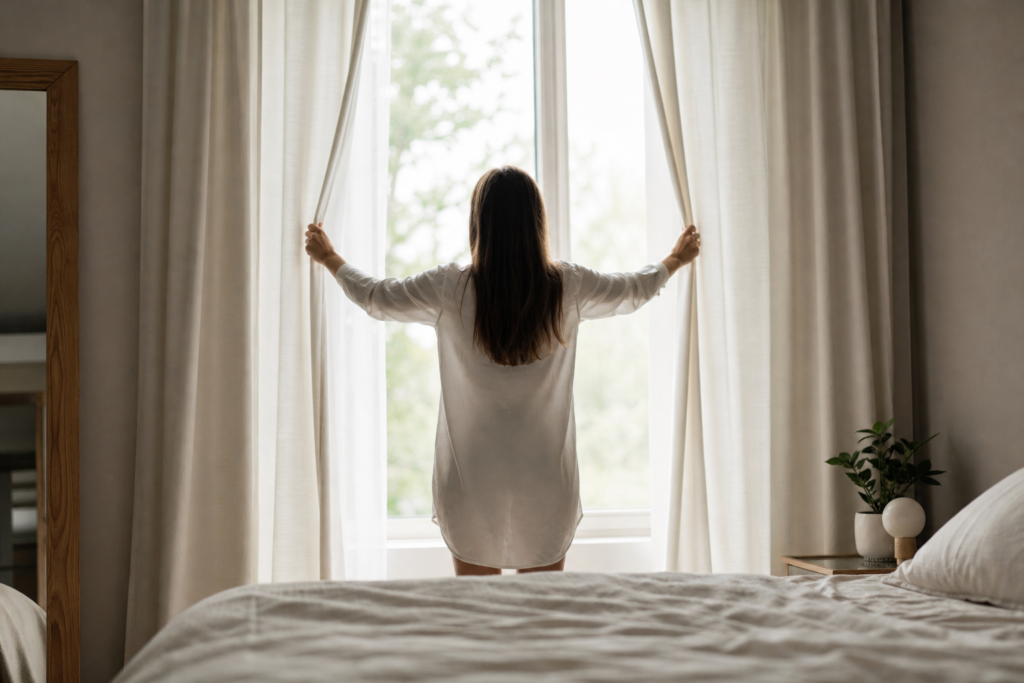
- opening the curtains right away
- standing by a bright window while you drink water
- stepping outside for 5 to 10 minutes
- walking to the mailbox or around the block
4. Add water before caffeine
If you wake up dry-mouthed, shaky, or headachy, start with water. This won’t solve anxiety on its own, but it is an easy way to support your body before adding more stimulation.
Caffeine can make anxiety worse for some people, and the NIMH specifically advises paying attention to how it affects your mood. If your morning coffee helps, you may not need to quit it. But you might do better with food first, a smaller amount, or a later first cup.
That matters at night too. Harvard Health notes that caffeine can take up to 8 hours to wear off, which can feed poor sleep and make anxious mornings more likely the next day.
5. Eat something steady if you can
An empty stomach and anxiety don’t always mix well. If you can tolerate food in the morning, go for something simple and familiar rather than waiting until you’re shaky and ravenous.
Examples:
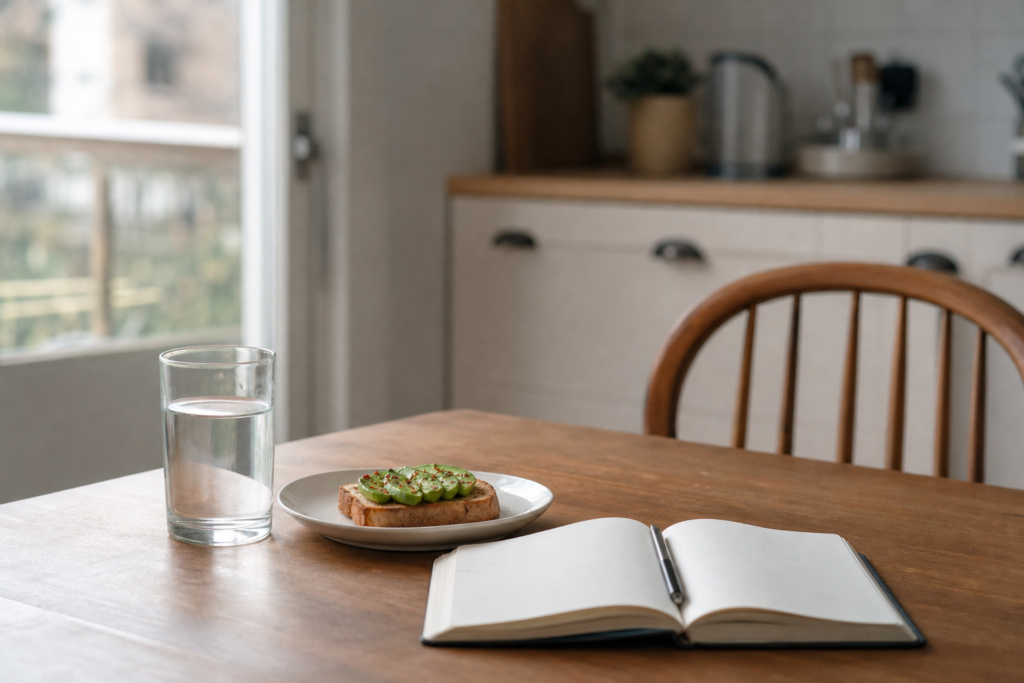
- toast with peanut butter
- Greek yogurt and fruit
- oatmeal with banana
- eggs and toast
- a smoothie if solid food feels hard
If breakfast is a struggle, prepping easy options helps. Hopeful Life’s breakfast ideas can give you a few low-effort options to rotate instead of deciding from scratch every morning.
6. Choose one calming practice, not five
This is where many routines go off track. You do not need breathwork, meditation, journaling, affirmations, stretching, gratitude, and a cold plunge before 8 a.m.
Pick one calming practice that feels doable when you’re actually anxious.
Good options include:
- Breathing. The NHS suggests breathing in gently through your nose and out through your mouth, counting 1 to 5 on the inhale and 1 to 5 on the exhale if helpful, repeated for at least 5 minutes.
- Grounding. Name five things you can see, four you can feel, three you can hear, two you can smell, and one you can taste.
- Mindfulness. The NCCIH notes that mindfulness meditation may help reduce symptoms of stress, including anxiety, and may also help improve sleep.
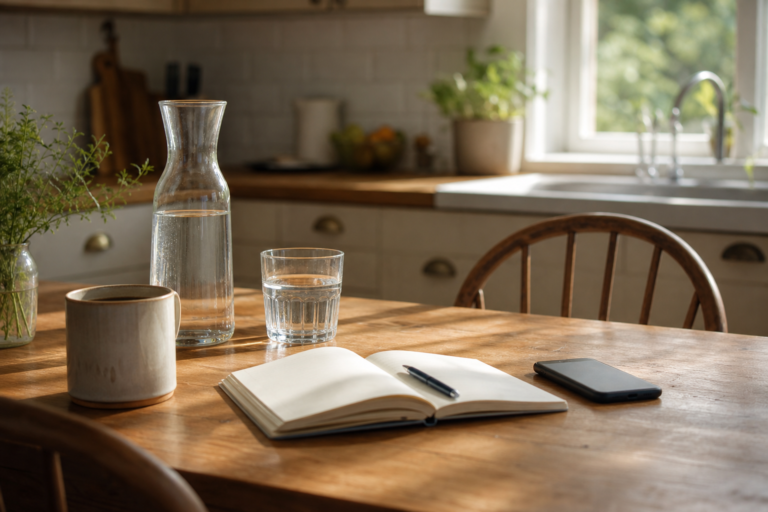
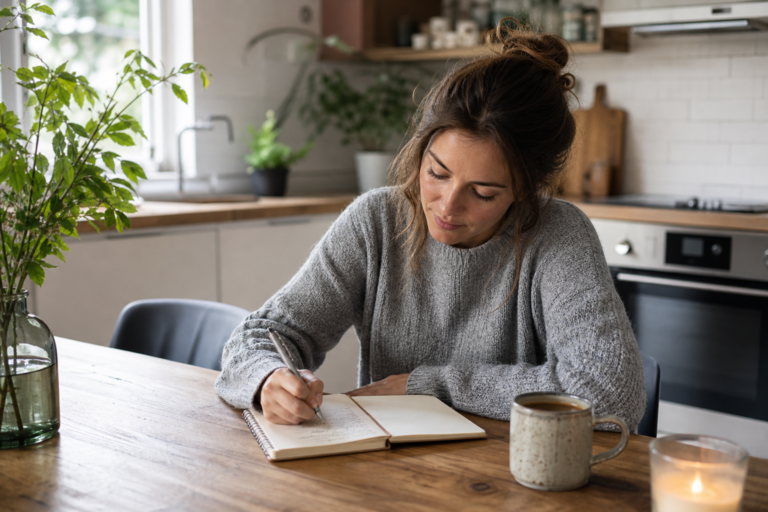
- Gentle writing. One page of “what feels loud right now” can be more helpful than trying to write something deep or inspiring.
The best choice is the one you’ll still do when the morning gets messy.
7. Move a little, even if it’s not a workout
Movement can help discharge some tension. NIMH notes that regular exercise supports mental health and that 30 minutes of walking every day can boost mood, though smaller amounts still count.
For anxious mornings, think gentle and low-pressure:
- 5 minutes of stretching
- a slow walk outside
- marching in place while the kettle boils
- a few yoga poses you already know
You are not trying to win the morning. You’re helping your body settle.
A simple 15-minute morning routine for anxiety
If you want a concrete example, here’s a short routine that keeps the focus on calm, not productivity.
| Time | What to do | Why it helps |
|---|---|---|
| Minute 1 | Sit up, put both feet on the floor, take a sip of water | Creates a gentle transition instead of jolting yourself awake |
| Minutes 2-5 | Open curtains or step outside | Light can help wakefulness and support a steadier body clock |
| Minutes 6-10 | Do slow breathing or grounding | Gives your nervous system one clear signal of safety |
| Minutes 11-15 | Eat something simple or prep breakfast | Reduces physical stress and prevents a rushed start |
If you have more time, add a short walk or stretch. If you have less, do the first two steps only. A two-step routine you repeat is more useful than an eight-step routine you avoid.
What to leave out of your routine
Sometimes the most helpful part of building a routine is deciding what not to include.
- Don’t start with your phone if it ramps you up. Emails, headlines, texts, and social feeds can flood you with noise before you’re grounded.
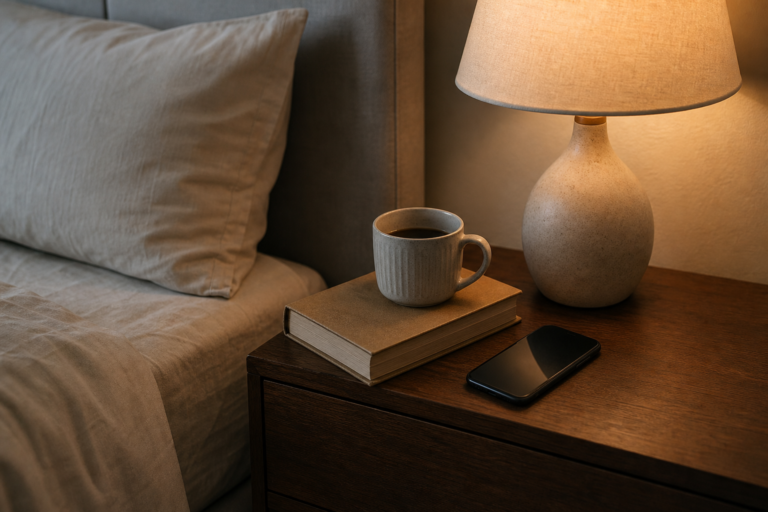
- Don’t build a routine around willpower. Lay out clothes, prep breakfast, fill your water bottle, and charge your phone outside the bedroom if that helps.
- Don’t make it too long. A routine that takes 60 to 90 minutes can become its own source of pressure.
- Don’t use caffeine as the whole plan. It may mask fatigue while making anxiety worse.
- Don’t punish yourself for imperfect mornings. Anxiety already brings enough self-criticism.
If you’d like more supportive habits and realistic self-care ideas, the site’s Wellbeing articles and Start Here page are good places to keep exploring without overload.
The night-before habits that make the biggest difference
If your mornings feel fragile, your routine probably starts the night before.
This doesn’t mean creating a perfect evening ritual. It means removing a few obvious obstacles.
- Set a realistic bedtime. Adults generally need at least 7 hours of sleep.
- Reduce screens before bed if they keep you awake. NIMH notes that blue light exposure before bed can make it harder to fall asleep.
- Prep one thing for the morning. Put out clothes, make overnight oats, or write tomorrow’s top three tasks on paper.
- Go easier on late caffeine. If you feel wired at night or your sleep is patchy, this is worth testing.
You don’t need a dramatic reset. Just make tomorrow morning a little less demanding than today’s.
How to personalize the routine without overthinking it
A morning routine for anxiety should fit your actual stress pattern.
Ask yourself:
- Do I wake up panicky, foggy, irritable, or drained?
- What usually makes it worse in the first 30 minutes?
- What is one thing that consistently helps, even a little?
Then build around that.
If you wake up overstimulated, focus on less noise, less light from screens, and slower transitions. If you wake up flat and heavy, light and gentle movement may matter more. If your mornings get chaotic because of family logistics, reducing choices the night before may help more than meditation.
This is also a good place to be honest. If journaling annoys you, skip it. If breathing helps but only for two minutes, do two minutes. Useful beats ideal.
When morning anxiety may need more support
A routine can help, but it is not a substitute for care if symptoms are severe, persistent, or making daily life hard.
NIMH advises seeking professional help if distressing symptoms last 2 weeks or more, especially if you’re struggling to do usual tasks or having a hard time getting out of bed because of your mood. If anxiety feels overwhelming, keeps interfering with work or relationships, or comes with panic, hopelessness, or safety concerns, please reach out to a qualified mental health professional or your doctor.
You don’t need to wait until things are unbearable to ask for help.
Start smaller than you think
If you’re building this routine from scratch, don’t begin with seven habits. Start with two.
For example:
- Wake up within the same 30-minute window.
- Open the curtains and drink water before checking your phone.
Do that for a week. Then add one more step if it genuinely helps.
If you want support that matches that gentler approach, you can also browse About Hopeful Life to see how this site approaches growth: practical, steady, and without the pressure to do everything at once.
Tomorrow morning doesn’t need to be perfect. It just needs to feel a little easier to step into.
Frequently Asked Questions
Why do I feel anxious in the morning for no reason?
Morning anxiety can happen even when nothing obvious is wrong. Common reasons include poor sleep, stress about the day ahead, caffeine, dehydration, low appetite, or waking up already tense. If it keeps happening or is making daily life hard, it’s worth talking with a qualified mental health professional or doctor.
What should I do first thing in the morning if I wake up anxious?
Keep the first few minutes simple. Sit up, put your feet on the floor, take a sip of water, and get some natural light if you can. Then do one calming step such as slow breathing or grounding before checking your phone, email, or news.
Does caffeine make morning anxiety worse?
It can for some people. Caffeine may increase jitteriness or make an already activated nervous system feel more intense. You may not need to cut it out completely, but it can help to drink water first, eat something, reduce the amount, or avoid having it too late the day before.
How long should a morning routine for anxiety be?
Short is usually better. A helpful routine can be 10 to 15 minutes if it includes a few steady basics like light, water, slow breathing, and a simple breakfast. The goal is not a long ritual. The goal is a routine you can actually repeat on ordinary mornings.


3 Comments