How to Stop Doomscrolling at Night and Sleep Better
If you want to know how to stop doomscrolling at night, start by making bedtime scrolling harder and winding down earlier, not by counting on discipline once you’re already tired. The most effective changes are usually simple: move your phone away from the bed, turn off alerts, set a short cutoff for news and social apps, and replace scrolling with something that still feels comforting or connecting.
That matters because nighttime scrolling is not just a blue-light issue. It’s also an emotional arousal issue. The feed keeps serving upsetting, high-energy content right when your brain is supposed to be settling down.
Why doomscrolling feels worst at night
Night sets you up to get stuck.
You’re tired, your self-control is lower, and there are fewer competing tasks. The room is quiet. The phone is close. Maybe you tell yourself you’ll just check messages or headlines for five minutes. Then one post turns into ten.
There is also a design problem, not just a personal one. News and social feeds tend to reward negative, high-arousal content because it grabs attention and spreads quickly. So even if you open your phone with a reasonable goal, the feed often pulls you toward more alarming material.
That’s why “just try harder” rarely works. Midnight is a bad time to negotiate with an infinite feed.
Sleep guidance is fairly clear here. The CDC’s sleep recommendations advise turning off electronic devices at least 30 minutes before bed, and NIH guidance suggests avoiding screens for about an hour before bed. Night mode may help a bit, but it doesn’t cancel out stimulating content or the habit loop itself.
The real goal: stay informed without staying in the feed
A lot of advice skips this part. You may not want to quit news, group chats, or social apps completely. You just want them to stop taking over your bedtime.
So don’t set the goal as “never check anything at night again.” Set the goal as: I will decide when and how I check, instead of checking by reflex in bed.
That shift matters. It turns the problem from a character flaw into a systems problem you can actually fix.
What to do tonight: the quickest way to break the cycle
If you want one simple plan for tonight, use this:
- Pick a screen cutoff time, ideally 30 to 60 minutes before sleep.
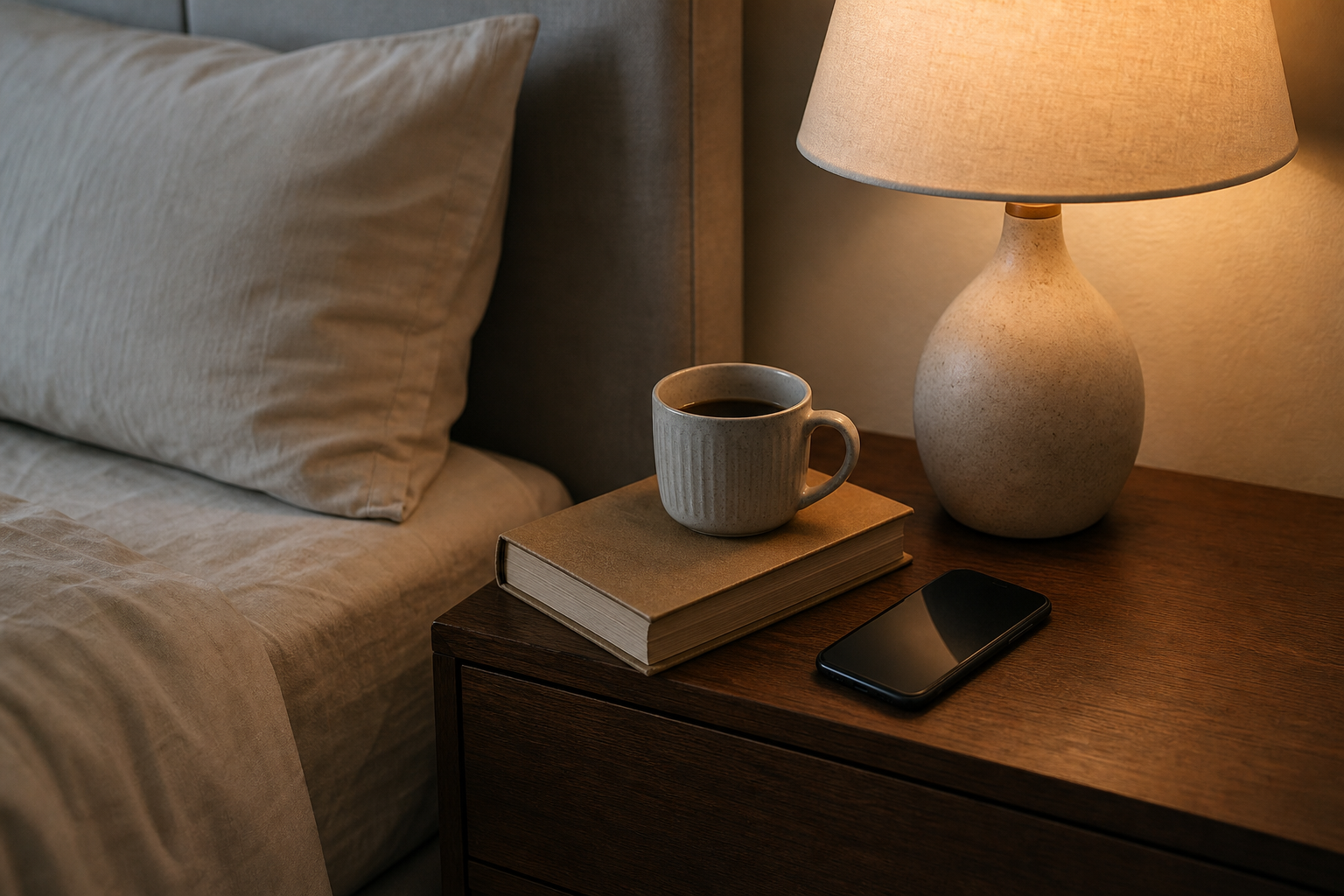
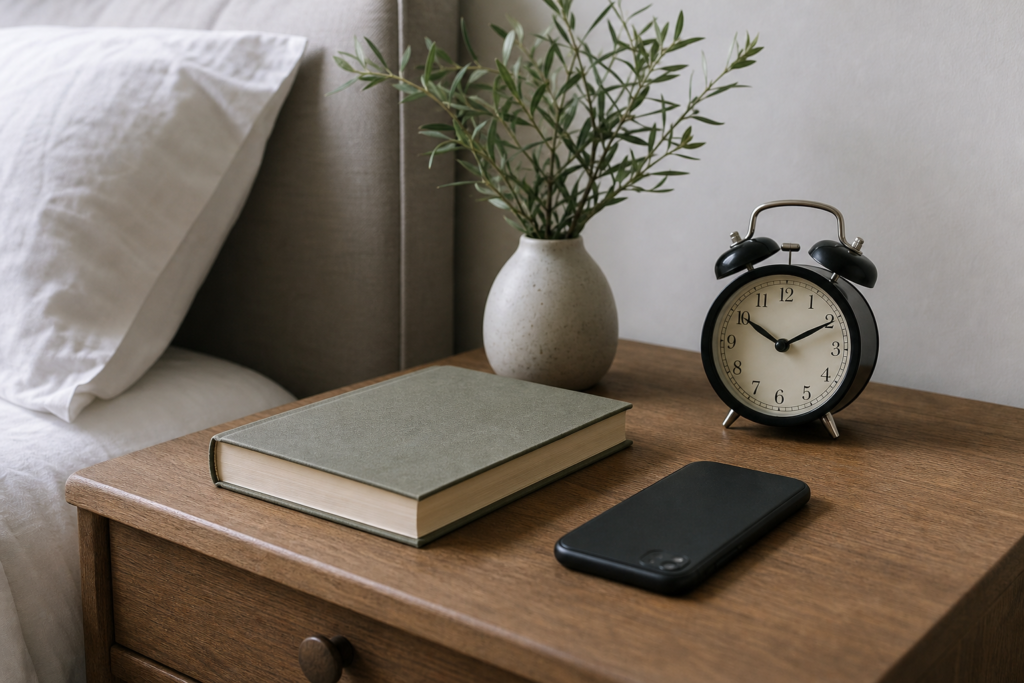
- Put your phone across the room, in a drawer, or outside the bedroom if you can.
- Turn off non-essential notifications, especially news and social apps.
- Choose one replacement activity for the first 10 minutes after cutoff.
- Use a real alarm clock or set your alarm before you put the phone away.
That’s enough to start. You do not need a full digital detox by bedtime tonight.
Phone settings that work better than willpower
Your evening setup should add friction. Not a huge amount. Just enough to interrupt autopilot.
1. Turn off the alerts that pull you back in
Disable push notifications for news, social media, shopping apps, and email. Leave on only what you truly need, such as calls from family or urgent work contacts if that applies to you.
This matters because many scrolling sessions don’t begin with boredom. They begin with a buzz, banner, or lock-screen headline.
2. Use app limits or downtime for your danger apps
Set a nightly limit for the apps you tend to use when you’re tired. Good candidates are X, Reddit, TikTok, Instagram, YouTube Shorts, and news apps.
If you always override the limit, make it slightly more annoying to ignore. Ask a partner to set the code, or place those apps in a hidden folder on the last screen of your phone.
3. Make your home screen boring at night
Remove tempting apps from your first screen. Replace them with calmer options like your library app, podcasts, notes, or a meditation app.
Better yet, switch your phone to grayscale in the evening. It’s less stimulating, and many people find it reduces the urge to keep tapping.
4. Charge your phone away from the bed
This one is boring. It’s also effective.
If your phone is within arm’s reach, you’ll reach for it half-asleep. If it’s on a dresser across the room, your odds improve immediately. If it lives outside the bedroom, better still.
5. Use Do Not Disturb with exceptions
You don’t have to choose between total access and total disconnection. Set Do Not Disturb so repeated calls from specific people can still come through. That gives you peace of mind without opening the door to endless notifications.
Evening cues that make scrolling less likely
Good habits are easier when your environment sends the right signal.
Here are a few cues that help your brain register, “we are closing the day now.”
- Dim the lights about an hour before bed.
- Do the same three things in the same order, such as wash face, make tea, read two pages.
- Put a book, magazine, or crossword where the phone usually goes.
- Keep chargers out of bed reach.
- Set out tomorrow’s clothes or make a short to-do list so your brain doesn’t keep using the phone to “prepare.”
The cue doesn’t need to be impressive. It just needs to be repeatable.
If your evenings already feel overloaded, a tiny routine is better than an ambitious one. You might like these tiny habits for better mental health when tired if big resets never seem to stick.
What to do instead of doomscrolling so you do not feel deprived
This is where many plans fall apart. If your only strategy is “do not scroll,” your brain will push back. You need a substitute that meets the same need, or at least part of it.
| If scrolling gives you… | Try this instead |
|---|---|
| Connection | Send one voice note or one text to someone you care about, then put the phone away |
| Information | Read one saved article from a trusted source, with a 15-minute timer |
| Escape | Read fiction, listen to an audiobook, or do a simple puzzle |
| Comfort | Herbal tea, stretching, warm shower, blanket, calm music |
| A sense of control | Write tomorrow’s top three tasks on paper |
| Something to do with anxious energy | Coloring, knitting, light tidying, breathing exercise |
The key is to choose the replacement before you’re tired. Decide now what your default will be.
Some people worry that a screen-free evening means boredom. For a few nights, it might. That doesn’t mean the plan is wrong. It usually means your brain is adjusting to less stimulation.
A realistic wind-down routine for people who hate rigid routines
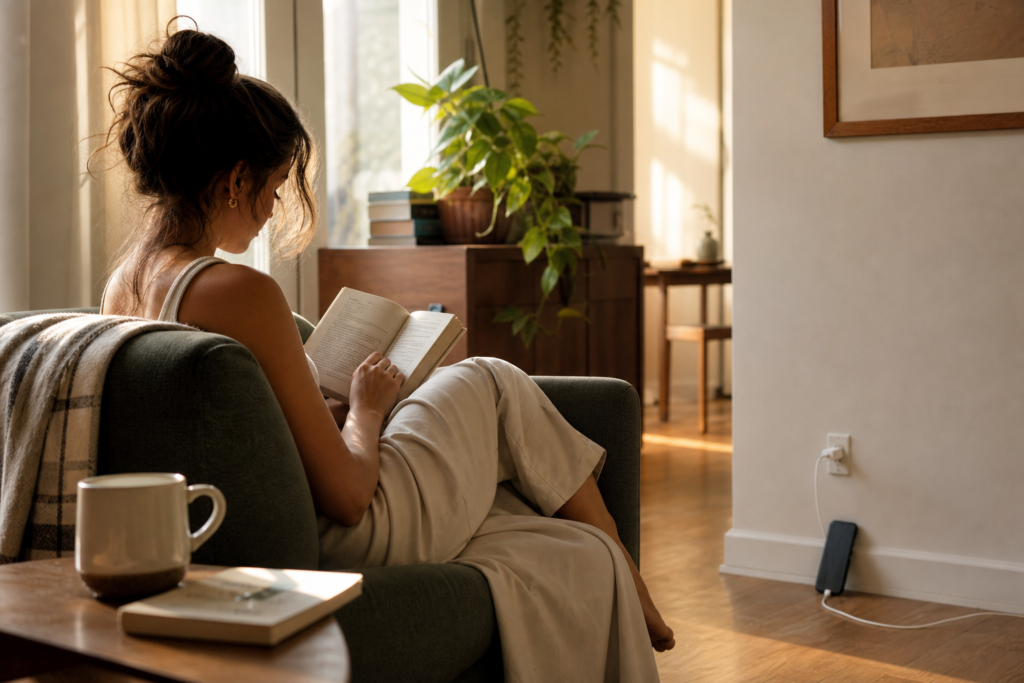
You don’t need a 12-step evening ritual. Try this 20-minute version:
- Minute 1: Plug in your phone outside arm’s reach and turn on Do Not Disturb.
- Minutes 2-5: Quick reset for tomorrow. Check your alarm, set out clothes, write any urgent reminder on paper.
- Minutes 6-10: Bathroom routine. Keep it plain and automatic.
- Minutes 11-20: One calm activity only, like reading, stretching, breathing, prayer, journaling, or soft music.
If that still feels like too much, shrink it further. Even 10 minutes of lower stimulation is better than none.
For mornings that feel rough after a late night, this low dopamine morning routine for a calmer day can help you stop chasing stimulation first thing.
How to stay informed without getting trapped
You don’t need to give up being informed. You need a better container for it.
Use planned check-ins
Pick one or two times a day to check news or social media intentionally. For example, 12:30 p.m. and 6:00 p.m. If you want, set a 15-minute timer, which is a strategy the APA recommends for social media use.
Choose a small number of trusted sources
Instead of opening a feed and letting the algorithm lead, go straight to one or two reliable sources. Read the front page or a newsletter, then stop.
Save, do not consume, late-night thoughts
If you see something at night that you feel you “need” to look into, add it to a notes app or paper list called “tomorrow.” That preserves the thought without starting the spiral.
Take one concrete action when the news is upsetting
Passive exposure often leaves you feeling worse. A small action can help more. That might mean donating, emailing a representative, checking on a friend, volunteering later, or simply learning from one solid source rather than 200 panicked takes.
If your problem is Reddit, comments, or endless threads
People searching “how to stop doomscrolling at night reddit” are often dealing with a specific trap: not just headlines, but comment chains, hot takes, and one more tab after another.
If that’s you, try these boundaries:
- Read the post, skip the comments unless you have a clear reason to open them.
- Use browser mode instead of the app. It’s clunkier, which helps.
- Log out every evening so re-entry is less automatic.
- Follow niche, slower communities only and unfollow high-drama ones.
- Set a rule of one thread at a time. No opening side links in new tabs at night.
Reddit can feel productive because you’re reading real people, not polished headlines. But at bedtime, that often creates more stimulation, not more clarity.
Common mistakes that keep the habit going
Relying on night mode alone
Night mode may reduce some light exposure. It doesn’t fix the bigger issue, which is that the content is activating and endless.
Using your phone as your only bedtime tool
If your alarm, music, reading, journaling, and social life all live in one device, bedtime gets messy fast. Splitting off even one function helps. A cheap alarm clock or paperback can make a bigger difference than you might expect.
Trying to quit everything at once
Cold turkey works for some people. For many others, it creates rebound scrolling. It’s usually more realistic to keep the connection while putting it on a schedule.
Keeping the bedroom as a scrolling zone
Sleep experts often advise keeping the bed associated with sleep, not stimulation. If you regularly scroll in bed, your brain starts linking that space with alertness.
If your mind is already overloaded, you may also find help in how to stop feeling overwhelmed with life or these signs you need emotional rest. Doomscrolling often gets worse when you’re emotionally wrung out.
What if you slip tonight?
Then you noticed it. That counts.
Don’t turn one late night into a story about failure. Ask one useful question instead: What was the moment I went on autopilot?
Maybe it was taking your phone to bed. Maybe it was a notification. Maybe it was feeling lonely after a hard day. Fix that point first.
You’re not trying to become a person who never uses a phone at night again. You’re trying to build an evening that doesn’t get hijacked so easily.
When to get extra help
If doomscrolling is tied to ongoing anxiety, insomnia, low mood, or compulsive phone use that feels hard to interrupt, it may help to talk with a qualified mental health professional or sleep specialist. Persistent sleep problems deserve proper support, especially if they are affecting work, relationships, or your daytime functioning.
For tonight, keep it simple. Pick a cutoff time, charge your phone out of reach, and choose one thing you’ll do instead for ten minutes. It’s a small step, but it’s a real one.
Frequently Asked Questions
How do I stop doomscrolling at night without feeling disconnected?
Keep connection, but put it in a container. Choose one short check-in earlier in the evening, turn off non-essential notifications, and let important calls bypass Do Not Disturb. You can still stay informed and reachable without letting the feed follow you into bed.
Why is doomscrolling worse at night?
It is usually worse at night because you are tired, less able to self-regulate, and more likely to be alone with your phone and your thoughts. The content is often emotionally charged too, which can keep your brain alert when it should be winding down for sleep.
Does night mode stop doomscrolling from affecting sleep?
Not fully. Night mode may reduce some light exposure, but it does not remove the stimulation of headlines, comments, videos and alerts. If you want better sleep, a screen-free period before bed and keeping your phone out of reach usually helps more than display settings alone.
How to stop doomscrolling at night Reddit-style when comments keep pulling me in?
Try using Reddit in a browser instead of the app, logging out each evening, and making a rule to read the post but skip the comments. You can also unfollow high-drama communities and avoid opening side links in new tabs, which is where one quick check often turns into an hour.
What should I do instead of scrolling before bed?
Pick one calming replacement that is easy and ready to go: a paperback, audiobook, gentle stretching, a crossword, journaling, or writing tomorrow’s top three tasks on paper. The best replacement is one that meets the same need, like comfort, escape or connection, without keeping you wired.