Low Dopamine Morning Routine for a Calmer Day
A low dopamine morning routine is really just a low-stimulation start to the day, not a literal dopamine “reset.” The idea is simple: cut back on early inputs like scrolling, urgent messages, loud media, and rushed decisions so your brain has a calmer path from sleep to alertness.
That matters because many rough mornings are not a motivation problem. They’re usually a mix of sleep inertia, too little sleep, habit loops, and too much stimulation too early. A calmer first hour can help, but it works best alongside decent sleep and realistic expectations.
What “low dopamine” really means
The phrase comes from the online idea of a “dopamine detox,” but that label can be misleading. Dopamine is a normal brain chemical involved in motivation, movement, and reward-seeking. You do not need to remove dopamine from your morning, and you can’t really “reset” your brain by avoiding pleasure for an hour.
A more accurate way to think about this routine is:
- Low stimulation instead of high stimulation
- Fewer fast rewards instead of constant novelty
- Lower decision load instead of instant reacting
- Wake-up support instead of forcing peak productivity at 6 a.m.
So if you skip TikTok, email, breaking news, ten browser tabs, and a group-chat argument before breakfast, you’ve got the idea. You’re making it easier to wake up before the world starts pulling at your attention.
There’s a solid reason this can feel helpful. The CDC explains sleep inertia as that groggy period after waking when thinking and mood can be off for 30 to 60 minutes, sometimes longer. A gentler routine gives your brain a quieter runway during that window.
Why calmer mornings help more than the trend language does
A lot of social posts make it sound like one exciting input will wreck your dopamine for the whole day. The evidence is not that tidy. What does seem clear is that mornings usually go better when you support your body clock, limit distraction, and remove unnecessary friction.
Three things matter most here:
- Sleep quantity. Adults generally need at least 7 hours a night. A routine can help, but it can’t make up for chronic short sleep.
- Light exposure. Morning light is one of the strongest cues for your sleep-wake cycle and can help your body shift into daytime alertness.
- Stimulation control. Your phone, inbox, and algorithm feeds are built to capture attention. Pushing them later gives you more control over your first hour.
That’s also why this idea overlaps so often with advice for anxiety, procrastination, or feeling scattered. Less input can mean less internal noise. If mornings already feel tense, you might also like these ideas on how to build a morning routine for anxiety.
One more thing: in 2024, 30.5% of U.S. adults reported sleeping less than 7 hours on average. That helps explain why so many people wake up feeling off. The bigger lever is often sleep, not a magic morning hack.
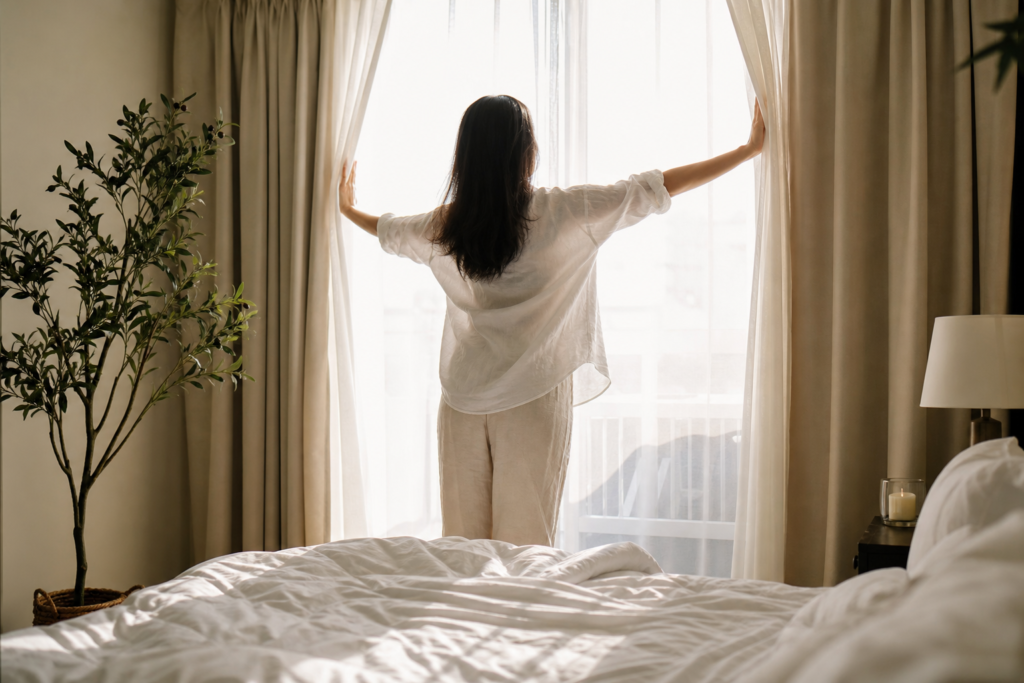
A practical low dopamine morning routine for the first hour
You do not need a perfect 5:00 a.m. ritual. You need a simple sequence that feels calm and repeatable. Here’s a realistic first-hour template.
0 to 5 minutes: wake up without adding noise
- Turn off your alarm.
- Leave your phone on Do Not Disturb if possible.
- Sit up, stand up, or put your feet on the floor right away.
- Avoid opening apps “just for a second.”
If you use your phone as an alarm, try putting only the alarm app on your lock screen and moving social apps off the home screen. Small barriers can help.
5 to 15 minutes: get light and water
- Open the curtains or step outside for a few minutes.
- Drink a glass of water.
- Wash your face if that helps you feel more awake.
Morning light is one of the most useful parts of this routine. According to the NHLBI, light helps regulate the sleep-wake cycle, and morning light supports wakefulness. If it’s dark where you live for part of the year, these tips for healthy routines for dark mornings may help.
15 to 30 minutes: do one low-stimulation activity
Pick one, not five.
- Stretch for 5 to 10 minutes
- Walk around the block
- Make your bed
- Journal one page
- Read two or three pages of a book
- Pray or sit quietly
- Unload the dishwasher
The point is not self-improvement points. It’s to create a calm bridge between sleeping and doing.
30 to 45 minutes: eat or prep breakfast
If you’re hungry, eat. If you’re not, at least set up something easy for later. A low dopamine morning routine does not require fasting, restriction, or punishment.
Good low-fuss examples:
- Greek yogurt with berries and oats
- Eggs and toast
- A banana with peanut butter
- Overnight oats
If easy breakfasts are a weak spot, browse the breakfast category and save two options that take under 10 minutes.
45 to 60 minutes: choose your first real task
Before you check everything, decide what comes first. Write one line on paper:
“The first useful thing I’m doing today is ______.”
This matters because reactive mornings often create reactive days. You don’t need a full planner session. Just choose the next right thing.
| If your morning feels like this | Try this adjustment |
|---|---|
| I wake up foggy and irritable | Prioritize light, water, washing your face, and a shorter to-do list |
| I lose 20 minutes scrolling | Keep phone in another room or use app blocks until after breakfast |
| I feel anxious right away | Delay email and news, do one grounding task first |
| I rush out the door hungry | Set out breakfast items the night before |
| I never stick to routines | Cut the routine to three steps and repeat those only |
What to avoid in a low dopamine morning routine
You don’t have to avoid all pleasure. You’re just trying not to flood your attention too early.
- Social media before you’re fully awake. It piles on novelty, comparison, and endless decisions.
- Email in bed. You start the day in response mode.
- Loud news or intense videos. Your nervous system may not need that at 7:05 a.m.
- Complicated choices. Save outfit planning, schedule reshuffling, and deep problem-solving for later.
- Judging yourself for being groggy. Grogginess after waking is common.
This is also where a lot of low dopamine morning routine Reddit advice gets a little extreme. Some threads suggest no music, no coffee, no pleasure, no talking, no this, no that. You do not need a monk-like protocol. If soft music helps you stay off your phone and move through the morning, that may be a reasonable trade.

What about coffee?
Coffee gets treated like a moral issue online, and it doesn’t need to be. Caffeine works partly by blocking adenosine, a signal tied to sleep pressure. For many people, coffee is a normal part of waking up.
Here’s the balanced version:
- If caffeine helps you, earlier in the day is generally better for sleep than later.
- The rigid rule to wait 90 to 120 minutes after waking is not strong settled science.
- If coffee on an empty stomach makes you shaky or nauseous, have it with food or a bit later.
- If you’re already anxious, experiment gently rather than assuming more caffeine will fix the morning.
So yes, a low dopamine morning routine can include coffee. The bigger question is whether coffee is supporting you or covering for too little sleep.
Does a low dopamine morning routine help with ADHD?
The search for low dopamine morning routine ADHD makes sense because ADHD often comes with distractibility, executive function struggles, time blindness, and difficulty getting started. A calmer first hour may help some people because it cuts down on choices and interruptions.
But ADHD is not solved by avoiding stimulation. What tends to help is structure:
- Use the same 3 to 5 steps every morning
- Lay out clothes, meds, keys, and breakfast the night before
- Use visual cues like a sticky note on the bathroom mirror
- Keep the phone physically out of reach until after one anchor task
- Choose movement that is easy to start, like a 5-minute walk
If you have ADHD, medication questions or functional impairment are worth discussing with a qualified clinician. The routine can support you, but it is not treatment.
How to make it stick when you’re tired, stressed, or inconsistent
The best routine is one you can still do on a bad Tuesday, not just an ideal Sunday.
Try these rules:
1. Keep the routine short
Start with three anchor habits: light, water, no scrolling. That’s enough to begin.
2. Prepare the night before
Put a glass by the sink, set out clothes, and decide breakfast. Morning calm often starts the evening before.
3. Match the routine to your season of life
If you have kids, shift work, pain, or low mood, your version may need to be smaller. That still counts. For very low-energy seasons, these tiny habits for better mental health when tired can be more realistic than a long checklist.
4. Don’t confuse stimulation with readiness
Scrolling can make you feel mentally “on” without making you genuinely ready. Ready often looks quieter: washed face, daylight, breakfast, one clear plan.
5. Review what actually derails you
If your routine falls apart every day at the same point, that point needs adjusting. Maybe you need a better bedtime, not better willpower. Maybe you need fewer steps. Maybe you need to stop keeping your phone by the pillow.
If your mornings have felt especially heavy lately, it may help to read signs you need emotional rest or how to stop feeling overwhelmed with life. Sometimes the issue is not the routine. It’s the load you’re carrying.
A simple 3-step version if you want to start tomorrow
If all of this still feels like too much, use this:
- Get light within 15 minutes of waking.
- Stay off your phone until after water and breakfast.
- Choose one first task on paper before checking messages.
Do that for one week. Not forever. Just long enough to notice what changes.
If you feel persistently exhausted, anxious, depressed, or unable to function during the day, it’s wise to check in with a qualified health professional. A calmer routine can help, but it should not replace medical or mental health care.
Tomorrow morning, don’t aim for perfect. Aim for quieter. That’s often enough to change the tone of the day.
Frequently Asked Questions
What is a low dopamine morning routine?
It’s a low-stimulation way to start the day. Instead of trying to “detox” dopamine, you reduce early inputs like scrolling, email, loud media, and rushed decisions. The aim is to support waking up, lower distraction, and create a calmer first hour.
Does a low dopamine morning routine actually work?
It can help, but not because it magically resets your brain. The stronger reasons are simpler: less early overstimulation, better support for sleep inertia, more morning light, and fewer attention-grabbing distractions. It works best alongside enough sleep and a realistic routine you can repeat.
Can a low dopamine morning routine help with ADHD?
For some people, yes. A calmer first hour can reduce distractions and decision overload, which may make it easier to get started. Still, ADHD usually needs more than a trend-based routine. Consistent steps, visual cues, night-before prep, and professional support can matter more.
Do I need to wait 90 minutes after waking to drink coffee?
Not necessarily. That rule is popular online, but the evidence behind a strict 90-minute delay is weak. If coffee helps you and doesn’t worsen anxiety or upset your stomach, having it earlier in the day is usually the more practical concern for sleep.
What do people mean by low dopamine morning routine Reddit advice?
Usually they mean avoiding phone use, social media, email, intense music, or quick-reward habits right after waking. Reddit threads can be useful for ideas, but they often turn flexible habits into strict rules. Use what helps you feel steadier, and ignore the extremes.