

Tiny Habits for Better Mental Health When Tired
Tiny habits for better mental health work best when they are genuinely tiny: simple actions you can still do when you’re running on empty. If you have no energy, don’t worry about building a perfect routine. Lower the bar until you can still step over it.
That might mean one slow breath, one sip of water, or one text to a friend. Small still counts. The National Institute of Mental Health notes that even small acts of self-care can make a real difference to stress and energy, and Stanford’s Tiny Habits framework suggests that a tiny habit can take less than 30 seconds.
The key isn’t willpower. It’s design. A tiny habit is easier to keep when you attach it to something you already do: after brushing your teeth, after plugging in your phone, after sitting down with your morning tea. If you want more gentle support like this, you can browse Hopeful Life’s wellbeing articles or start with the site’s Start Here page.
What makes a habit “tiny” enough to work?
Most people make the same mistake. They choose a habit that sounds sensible on paper but is too big for real life.
When you’re low on energy, a useful tiny habit should be:
- Very small, often under 30 seconds
- Easy to start, with almost no setup
- Tied to an anchor, such as “After I boil the kettle, I will…”
- Flexible, so a low-energy version still counts
That last point matters. If your habit only “counts” when you do the full version, you’re much more likely to drop it the first rough week.
Try this formula: After I [current routine], I will [tiny action].
Examples:
- After I sit on the bed, I will take one slow breath.
- After I pour coffee, I will drink three sips of water.
- After I plug in my phone at night, I will put it face down.
That’s the kind of habit that can hold up on hard days.
15 tiny habits for better mental health
You do not need all 15. Pick one. If that feels manageable after a week or two, add another.
1. Take one slower-than-usual breath
When your body is tense, your mind usually follows. One deliberate breath won’t fix everything, but it can interrupt the stress spiral for a moment.
Try: After you touch a doorknob, inhale through your nose and exhale a little longer than usual.
2. Drink water before your first caffeine
NIMH recommends regular meals and hydration because they can support energy and focus through the day. You don’t need a giant bottle or a tracking app. Start smaller.
Try: After you enter the kitchen, drink half a glass of water before tea or coffee.
3. Stand outside for 30 seconds
Fresh air, daylight, and a quick change of environment can help you feel less stuck. This can be especially helpful if you’ve been indoors for hours.
Try: After you put on your shoes, stand on the step, balcony, or by an open door for half a minute.
Low-energy version: Open a window and look outside.

4. Do a 20-second “exercise snack”
The American Psychiatric Association points out that short bursts of movement, sometimes called exercise snacks, can be an easy way to add movement during the day. NIMH also says small amounts of exercise add up.
Try: After using the bathroom, do 10 calf raises, walk the hallway once, or climb one flight of stairs.
5. Unclench your jaw and drop your shoulders
Stress often shows up in the body first. Releasing tension sends a useful signal: you are safe enough to soften a little.
Try: After your phone lights up, relax your shoulders and loosen your jaw before you check it.
6. Put your phone out of reach for one task
Constant checking can keep your brain on alert. You don’t need a total digital detox. Just one small pocket of less stimulation can help.
Try: After you sit down to eat, place your phone on a counter or shelf until you’re done.
If overwhelm is a regular theme for you, the articles in Start Here may help you build a calmer baseline without trying to do everything at once.
7. Send one honest text
Social connection supports emotional wellbeing, and public health guidance consistently links connection with better stress management and sleep. The message doesn’t need to be deep.
Try: After lunch, text one person: “Thinking of you,” “How’s your day going?” or “I’m low-energy today but wanted to say hi.”
8. Name your feeling in one word
You don’t have to force gratitude or positivity when you’re struggling. Sometimes the gentlest move is simply noticing what’s true.
Try: After you wash your hands, ask: “What am I feeling right now?” Pick one word. Tired. Flat. Nervous. Irritated. Lonely.
Putting a word to a feeling can make it seem less vague and less overwhelming.
9. Make your bed badly
Not perfectly. Just enough to make the room look a little less chaotic.
Try: After you get up, pull the duvet up and straighten one pillow. That’s it.
A small visual reset can make the next choice feel easier too.
10. Eat something with protein or fiber at your first meal
Mental health habits are not only about mindfulness. Food matters too. If your mornings are rushed or your appetite is low, keep it basic.
Try: Add one practical item like yogurt, eggs, peanut butter toast, oats, or fruit with nuts. If breakfast ideas would help, Hopeful Life’s breakfast recipes category may give you a few easy options.
11. Write one line, not a whole journal page
The CDC suggests gratitude journaling as one option for emotional wellbeing, but you do not need a long reflective practice for this to help.
Try: After dinner, write one sentence: “Today felt hard, but I answered that email,” or “The shower helped,” or “The sky looked good at 6 pm.”
This often works better than fake positivity because it leaves room for real life.
12. Choose tomorrow’s bedtime cue
Sleep is not only about total hours. A growing body of research suggests that sleep regularity matters too. Going to bed at wildly different times can make everything feel harder.
Try: After clearing your cup at night, set one bedtime cue for tomorrow, such as an alarm labeled “brush teeth” or “lights low.”
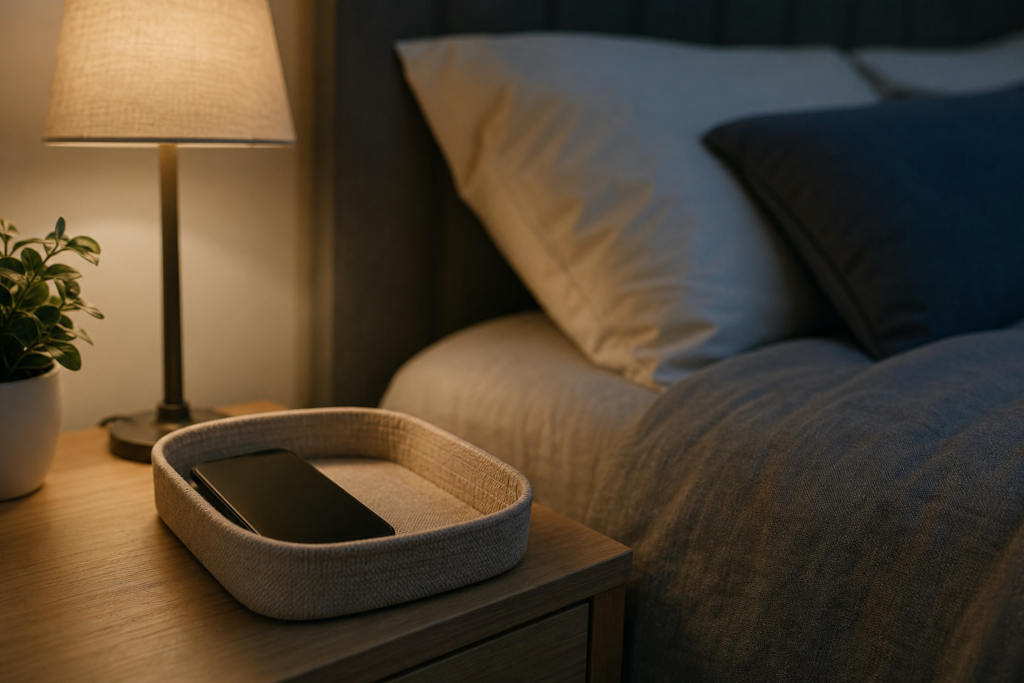
13. Reduce screen light 15 minutes earlier
NIMH advises reducing blue light before bed because screen exposure can make it harder to fall asleep. If an hour feels unrealistic, start with 15 minutes.
Try: After plugging in your phone, switch on night mode, dim the screen, or stop scrolling one song earlier than usual.
14. Wash one dish or clear one surface
A full clean-up can feel impossible when you’re worn out. One tiny act of order is different. It reduces visual stress without turning into a major task.
Try: After reheating food, wash one plate or clear one corner of the counter.
15. Say the next step out loud
When you’re overwhelmed, your brain often treats everything as one huge pile. Shrinking the task can reduce friction.
Try: After you notice yourself freezing, say out loud: “Next step: put clothes in basket,” or “Next step: open laptop,” or “Next step: get into the shower.”
That’s often enough to help you get moving.
Tiny habits for mental health that help most when you’re exhausted
If you’re deep in a tired season, start with habits from these four areas first:
| Need | Tiny habit | Why it helps |
|---|---|---|
| Calm | One slower breath | Creates a brief pause in the stress response |
| Energy | Drink water before caffeine | Supports focus and basic physical needs |
| Mood | 20-second movement break | Adds a small dose of movement without pressure |
| Sleep | Phone away 15 minutes earlier | Reduces overstimulation before bed |
If you only choose one habit from this article, pick the one that feels almost too easy. That’s usually the right one.
Common mistakes that make tiny habits harder
Starting with five habits at once
This is the fastest way to turn a simple idea into one more thing you’re “failing” at. Start with one.
Choosing a vague cue
“After dinner” is fuzzy. “After I put my fork in the sink” is better. Specific anchors are easier to repeat.
Making the habit too big
If your “tiny” habit is a 10-minute walk, a full journal entry, and a smoothie, it may be a good routine, but it’s not tiny. Shrink it.
Treating missed days as proof it doesn’t work
Slipping during stress, illness, busy periods, or low mood is normal. Restarting counts.
Using self-care to avoid bigger problems
Small habits can support mental health. They cannot replace proper help when something deeper is going on.
When self-help may not be enough
If low mood, anxiety, exhaustion, loss of interest, changes in appetite, trouble concentrating, or difficulty doing normal daily tasks lasts for two weeks or more, it’s a good idea to talk with a qualified mental health professional or your doctor. Self-care can help, but it isn’t a substitute for treatment.
If you want a reputable overview of basic self-care areas, the National Institute of Mental Health’s guidance on caring for your mental health is a helpful place to start. For habit design, Stanford’s Tiny Habits guide explains the anchor method clearly.
A gentle way to start today
Pick the habit that feels easiest, not the one that sounds most impressive. Write it in this format: After I ______, I will ______.
For example: After I put the kettle on, I will drink three sips of water.
Do that for a week. No tracking chart unless it helps. No pressure to add more. Just one small promise that still fits your real life.
If you want more grounded, practical ideas, you can also read about Hopeful Life and explore the site as you build your own calmer routines.
Frequently Asked Questions
What are tiny habits for mental health?
Tiny habits for mental health are very small actions you repeat daily or almost daily, often attached to an existing routine. Think one slow breath, one glass of water, or one short walk to the mailbox. The goal is to make the habit easy enough to do even on low-energy days.
Do tiny habits actually help when you have no energy?
They can help because they lower the effort needed to care for yourself. Tiny habits won’t fix every mental health struggle, but they can support mood, stress, sleep, and daily functioning by making small helpful actions more realistic when motivation is low.
How many tiny habits should I start with?
Start with one. If you begin with too many habits, the routine can quickly feel heavy and easy to abandon. Choose the smallest useful action, attach it to a clear cue, and repeat it for a week or two before adding anything else.
What if I miss a day?
Missing a day does not mean the habit failed. Stress, illness, poor sleep, and busy seasons affect everyone. The simplest response is to start again at the next cue without trying to make up for it or turning it into a judgment about yourself.
When should I get professional mental health support instead of trying habits?
If symptoms like low mood, anxiety, trouble getting out of bed, loss of interest, appetite changes, or difficulty doing normal tasks last two weeks or more, talk with a qualified professional. Tiny habits can be supportive, but they are not a replacement for proper mental health care.





3 Comments