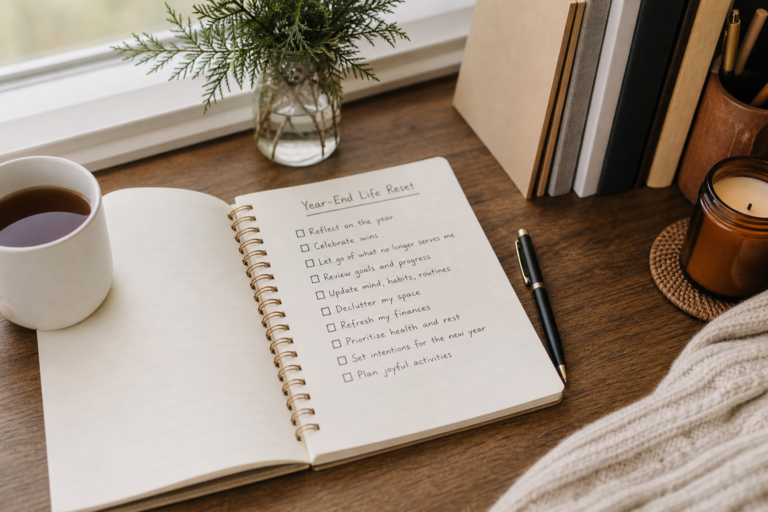

Daily Routine for Mental Health at Home
A daily routine for mental health at home works best when it gives your mind a few predictable anchors, not a packed schedule. The basics that help most are consistent sleep and wake times, daylight, some movement, regular meals, short breaks, and at least one point of human connection.
If your mood is low or your mind feels scattered, don’t try to rebuild your whole life by Monday. Start with one or two anchors you can repeat at home, then let the rest grow around them.
Why routines help your mind feel steadier
Mental health routines are not about becoming ultra-disciplined. They’re about reducing friction in your day.
When your day has some shape, your brain has fewer decisions to make. You don’t have to keep asking, What now? That matters when you’re anxious, overstimulated, tired, or emotionally flat.
At home, routines can also support emotional regulation. You eat before you’re shaky. You rest before you’re fried. You notice your mood before it turns into a full spiral.
Good routines are flexible, too. A strict schedule often falls apart the first time real life gets messy. A few reliable anchors usually hold up better.
The 6 anchors that matter most at home
If you do nothing else, focus here. These habits support mood, energy, sleep and consistency without asking too much from you all at once.
1. A regular sleep and wake time
Adults generally need 7 or more hours of sleep on a regular basis. Just as important, your sleep timing matters too. Going to bed and waking up at roughly the same time helps your body know when to feel alert and when to wind down.
If your evenings drift, start by picking a wake-up time you can keep most days. Then move bedtime gradually.
If nights are a struggle, these guides may help: a bedtime routine for overthinking adults and how to stop doomscrolling at night and sleep better.
2. Daylight early in the day
Try to get about 30 minutes of natural daylight during the day. Morning light is especially helpful for many people because it supports your body clock and can make it easier to feel awake earlier and sleepy later.
This doesn’t have to mean a long walk. Sit on the porch. Water plants outside. Walk around the block. Open the curtains and step into daylight with your coffee.
3. Movement that is easy to repeat
Exercise helps mental health, but it doesn’t need to be intense. Even 30 minutes of walking can boost mood, and shorter bouts still count.
For broader health benefits, adults are generally advised to aim for 150 to 300 minutes of moderate activity a week. That sounds like a lot until you break it down. Twenty to thirty minutes most days gets you close.
The key question is not, What’s ideal? It’s, What will I actually do at home on a Wednesday?
4. Regular meals and enough water
Many people don’t realise how much skipped meals can worsen irritability, anxiety, brain fog, or that wired-but-tired feeling. A mental health routine works better when you eat at roughly expected times.
Think simple, not perfect:
- breakfast within 1 to 2 hours of waking if that suits your body
- lunch before you get overly hungry
- a balanced dinner instead of grazing all evening
- a water bottle where you actually sit
If caffeine makes you jittery or alcohol leaves you flat, pay attention to that pattern. You don’t need a moral rule. You need useful information.

5. A planned pause for your nervous system
Rest shouldn’t only happen when you crash. Build one or two short recovery moments into the day on purpose.
That could be:
- 5 slow breaths before starting work
- 10 minutes of stretching after lunch
- a short meditation
- music without multitasking
- quiet tea time with no phone
- a low-stress hobby in the evening
If you’ve been running on fumes, you may also relate to these signs you need emotional rest.
6. Some form of connection
Isolation can make stress and low mood worse. Connection doesn’t have to mean constant socialising. It can be one text, one voice note, lunch with your partner, a call with your sister, or chatting with a neighbour while taking out the bins.
Try to include at least one small moment of contact in your routine, especially if you spend most of the day alone at home.
A simple daily routine for mental health at home
Here is a realistic example. Not a perfect day. Just a solid one.
| Time of day | Anchor | What it might look like |
|---|---|---|
| Morning | Wake at a steady time | Get out of bed, open curtains, drink water |
| Morning | Light and movement | 10 to 30 minute walk, stretch, or sit outside |
| Morning | Simple start | Breakfast, shower, make a short plan for the day |
| Midday | Regular food and break | Lunch away from screens, 5 minutes of breathing or quiet |
| Afternoon | Energy check | Do one priority task, then take a short reset break |
| Evening | Connection and gentle transition | Talk to someone, tidy one area, lower stimulation |
| Night | Wind-down | Dim lights, reduce screens, same bedtime most nights |
Notice what’s missing? A 19-step miracle morning. You do not need one.
How to build a routine you can keep
The best routine is the one that survives low motivation, busy weeks and poor sleep. That means it needs to be small enough to repeat.
Start with one or two anchors
Good starting points are:
- wake up within the same 30 to 60 minute window
- get outside for 10 minutes after waking
- eat lunch before 1 p.m.
- take a 10 minute walk at 3 p.m.
- put your phone down 30 minutes before bed
If you want help shaping the start of your day, read how to build a morning routine for anxiety or this low dopamine morning routine for a calmer day.
Shrink habits on hard days
This is where many routines fail. People think if they can’t do the full version, it doesn’t count. It does.
Your full version might be a 30 minute walk. Your hard-day version might be 3 minutes on the doorstep.
Your full version might be cooking dinner. Your hard-day version might be toast, eggs and fruit.
Your full version might be journaling for 15 minutes. Your hard-day version might be writing one sentence: Today feels heavy, so I’m keeping things simple.
That still protects the routine.
For more ideas, see tiny habits for better mental health when tired.
Attach habits to things you already do
This makes routines easier to remember.
- After brushing your teeth, open the curtains
- After lunch, walk for 10 minutes
- When you put the kettle on, fill your water bottle
- After dinner, text one person back
- At 9 p.m., charge your phone outside the bedroom
Plan for your common trouble spots
Most people already know where the day goes wrong.
Maybe you stay in bed scrolling. Maybe you work through lunch, then crash at 4 p.m. Maybe evenings disappear into snacks, TV and low-level dread.
Pick one friction point and solve that first. If home life feels mentally cluttered, how to stop feeling overwhelmed at home may help you clear a little space.
What to do on low-energy or anxious days
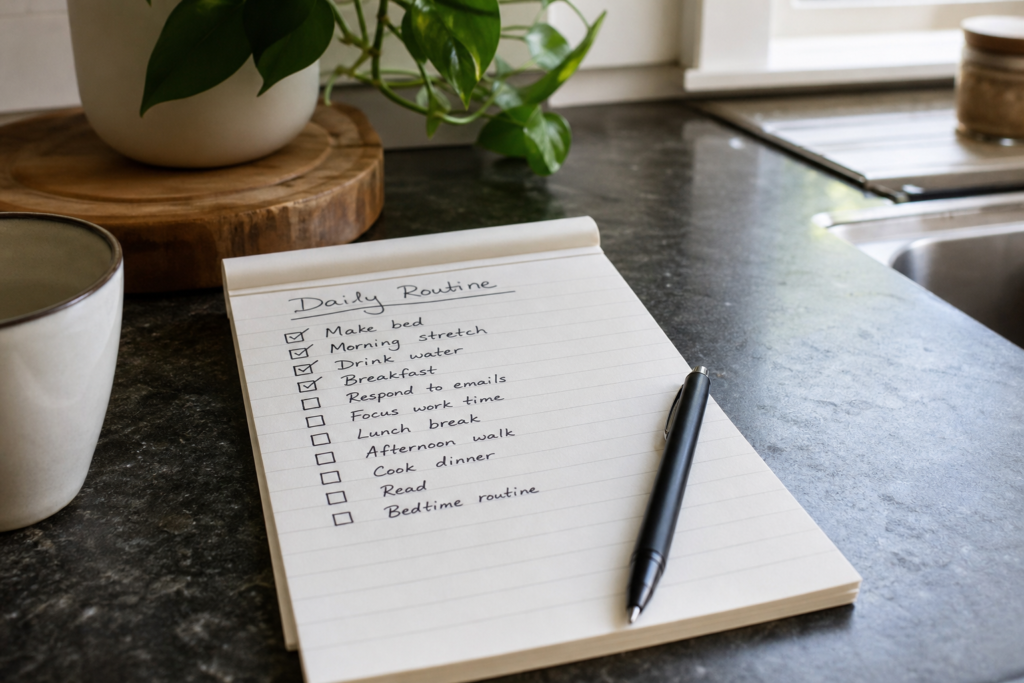
You do not need a separate life plan for bad days. You need a reduced version of your usual one.
Try this minimum routine:
- get out of bed and wash your face
- open the curtains or step outside for 2 to 10 minutes
- eat something with protein or carbs
- drink a glass of water
- do one small task only
- message one safe person
- start your bedtime routine on time
That’s enough for a hard day. Really.
If your mind feels full and snagged, decluttering your mind when it feels like too much can help. If you process better by writing, try these journaling prompts for when you feel stuck.
Common mistakes that make routines harder
Trying to change everything at once
It usually backfires. New wake time, gym plan, meditation, meal prep, no sugar, no screens. By day four, you’re exhausted.
Pick the habits that give the biggest return first: sleep timing, daylight, movement, meals.
Making the routine too rigid
Your routine should support your life, not punish you for having one. Keep the anchors steady, but allow different versions.
Focusing only on productivity
A mental-health-supportive day includes work and care. If your routine has chores, admin and output but no pause, it’s incomplete.
Ignoring your evening
Many people put all their effort into mornings and then lose the plot at night. But your evening routine sets up tomorrow’s mood and energy.
If dark mornings or winter make things harder, these may help: healthy routines for dark mornings and how to cope with seasonal depression naturally.
When self-care is not enough
Routines can support your mental health, but they are not treatment for everything.
If severe or distressing symptoms last 2 weeks or more, or you’re struggling to function, sleep, get out of bed, or feel interested in daily life, it’s a good idea to talk with a qualified mental health professional or doctor. If you are in immediate danger or thinking about harming yourself, seek urgent local support right away.
If you want a clear, trustworthy overview, the NIMH guide to caring for your mental health is a useful place to start. For sleep basics, this healthy sleep overview from NIH is practical too.
Your easiest next step
Choose one anchor for the morning and one for the evening. For example: step outside within 30 minutes of waking, and put your phone away 30 minutes before bed.
Do only those for a week. If they help, keep them. A better day often starts that simply.
Frequently Asked Questions
What is the best daily routine for mental health at home?
The best routine is one you can repeat without forcing perfection. For most people, that means a steady wake time, some daylight, regular meals, a little movement, a planned pause, and a consistent wind-down at night. Simple anchors usually work better than a strict hour-by-hour schedule.
How do I start a mental health routine if I feel depressed or overwhelmed?
Start very small. Pick one morning anchor and one evening anchor, such as opening the curtains after waking and putting your phone away before bed. On hard days, reduce the routine instead of quitting it. If symptoms are severe, last two weeks or more, or affect daily functioning, speak with a qualified professional.
How much exercise helps mental health?
Even light movement can help. A daily walk is a practical place to start, and short bouts still count if 30 minutes feels like too much. For broader health benefits, adults are generally advised to aim for 150 to 300 minutes of moderate activity each week.
Does sleep timing really matter for mental health?
Yes. Getting enough sleep matters, but regular timing matters too. Going to bed and waking up at roughly the same times each day supports your body clock and can help mood, focus and energy feel more stable. Irregular sleep often makes everything feel harder.
What should I do on low-energy days so my routine doesn’t fall apart?
Use a minimum version of your normal routine. Get out of bed, wash your face, open the curtains, drink water, eat something simple, and do one small task. Keeping even a tiny version going protects the habit and makes it easier to return to your full routine later.